

The Foundation of the Universal Fire Mandala

Akhamani

The Foundation of the Universal Fire Mandala

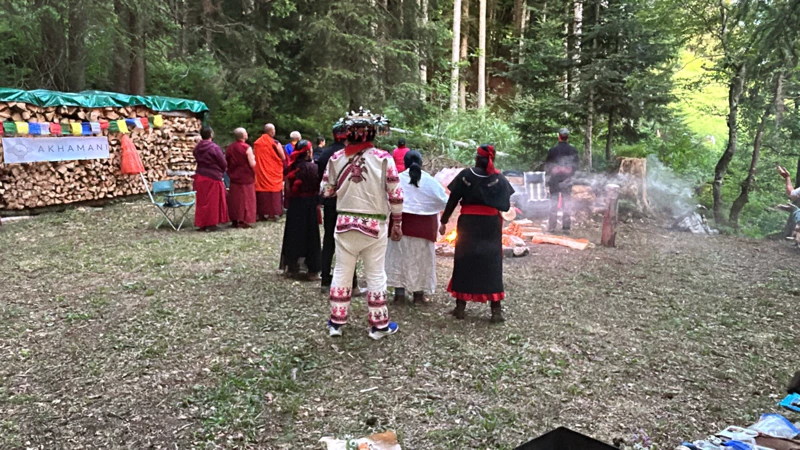
Every aspect of the Unifying Ancestral New Fire in Switzerland was consciously structured to revive and awaken an ancient Fire Ceremony. To unite the ancestral wisdom of Fire Practice that is common across the world. It was shaped in accordance with the ancient teachings of the wisdom keepers of the sacred fire ceremony who have accompanied and guided us in this journey. Their teachings, complimented with a vast body of research on the practice are more than just about a ‘fire ritual’, they are a way of being, a way of life, a framework for understanding our relationship with transformation, sacrifice, and the divine fire that burns within and around us.

Below is a thorough explanation to help you understand how the Unifying Ancestral New Fire in Switzerland was structured and why we made certain choices for its balanced & harmonious unfolding. We are grateful to have been part of the manifestation, from this ceremony, of the Universal Fire Mandala.

Intention

The first spark of any ceremony is the intention. It is the clear and precise outline of what kind of experience is being sought: where, how, when, and for whom the ceremony is supposed to take place. Setting a clear and consciously directed ceremonial intention is the main premise for a harmonious and balanced unfolding of a ceremony. It lays the foundation on which all ceremonial work is built on – acting as the framework in which the ceremony may unfold. It is the guideline for the practitioners, the spirits, and energies towards the work they may be called in for.

On the personal level, Intentions are purposeful, conscious directions that guide our actions and focus our energy. In the context of ancestral ceremonies, setting intentions involves identifying specific goals or desires you wish to explore or achieve during the experience. Intentions act as a compass, directing the insights and transformative power of ceremony. By setting clear, heartfelt intentions, we create a framework for our journey that can help focus our minds, engage our emotions, and open our spirit to the teachings and healing potential of the ceremonial unfolding. 

Be it for the ceremonial or the personal direction – the importance of taking the time to set conscious and clearly directed intentions can not be overemphasized.

The intention of the Unifying Ancestral New Fire in Switzerland initially was to learn about the forms of ceremonial fire in Europe and world wide; To remember the ancestral European roots of how sacred fire was incorporated into spiritual practice and life at large, and how it has accompanied and helped us to connect with spirit, ourselves, & all of creation. 
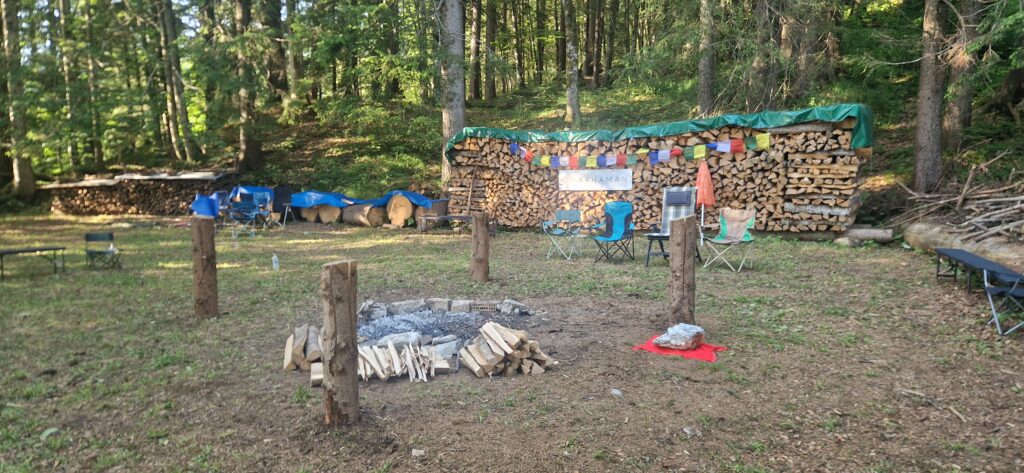
It is from the collective understanding, of what constitutes an ancestral fire, that our initial aspiration, to recover an ancestral fire ceremony rooted in the ways of ancient Europe, evolved into a universal approach. As is clearly evident from our research and the many conversations with fire keepers around the world, there is one common root, and one unifying flame that has lit all ancestral fires across the world since the beginning of time. We will thus aspire to practice the Alchemical Secret fire in our attempt to journey towards that one flame– the energy of universal wisdom that animates all. As many elders have often said, in many different ways, it is time to understand that the time has come to unite humanity through its spirit–  the burning flame within all– instead of finding differences that have been created across time to distance us from that origin and from each other.  

The Fire of Wisdom is Our Wise Elder & Teacher
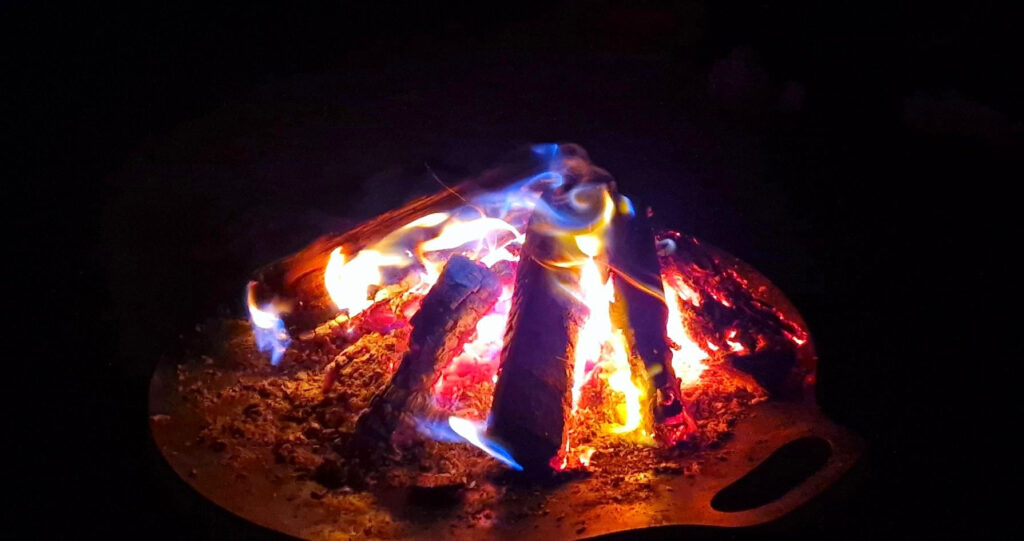
There are people who step into a fire ceremony and emerge acting differently. They speak differently. They walk differently. They feel special. As if drawing close to the fire had placed them above others. But fire does not create personas. The fire reveals. And sooner or later, it also reveals who uses the path to gaze at themselves, and who works with it to transform themselves.

Sitting near the embers doesn’t make anyone humble. Or profound. Or wise. That shows later on. In how you speak. In how you treat people. In how you stand by your word during the ceremony and when the ceremony is over.

For the Lakota, fire is Wanáǧi Tȟáŋka, the Great Spirit’s breath, a living force that does not bow to human ego. The sacred pipe’s smoke carries prayers to the heavens, but the fire itself requires honesty— no amount of ceremony can hide a heart unready to change.

The Maya speak of the Holocan, the sacred fire that purifies the world, burning away corruption and falsehood. But the fire does not ask for your name, or your lineage, only your willingness to let go of what no longer serves the people or the land.

In the traditions of the First Nations, the fire is not a spectacle. It is a mirror. It shows you the weight you carry— the grief, the anger, the unhealthy egoic ways, the stories you cling to— and asks, “Will you leave them here, or take them back into the world?”

The fire does not judge. It only reveals what is true.

And what remains after the flames have done their work is the truth of who you are without the masks you wear.

Sacred Fire is the Light of Wisdom

In the Buddhist canon, fire (tejas) is one of the great elements, a symbol of transformation and purification. The Buddha himself was said to have been born from a sacred fire, a sign that enlightenment is not given— it is uncovered through letting go. The Zen master Dōgen wrote: 

“To study the self is to forget the self. To forget the self is to be enlightened by all things.”

The fire in meditation is not the flame you see, but the burning away of illusion— the stories of “I,” “me,” and “mine.” A ceremony, a retreat, a thousand prostrations— these are fingers pointing at the moon. The moon is your own mind, and the fire is the heat of awareness that melts the ice of ignorance.

The Tibetan Buddhists speak of chö, the practice of cutting through attachment. In the fire offering (jinsek), practitioners burn representations of their suffering, not to feed their pride in “having overcome,” but to remind themselves: “This too must pass. What am I still holding onto?”

The fire does not care for your title. It only asks: “What will you surrender today?”

Why We Lit the Unifying Ancestral New Fire During Summer Solstice
Capture 2026 05 18

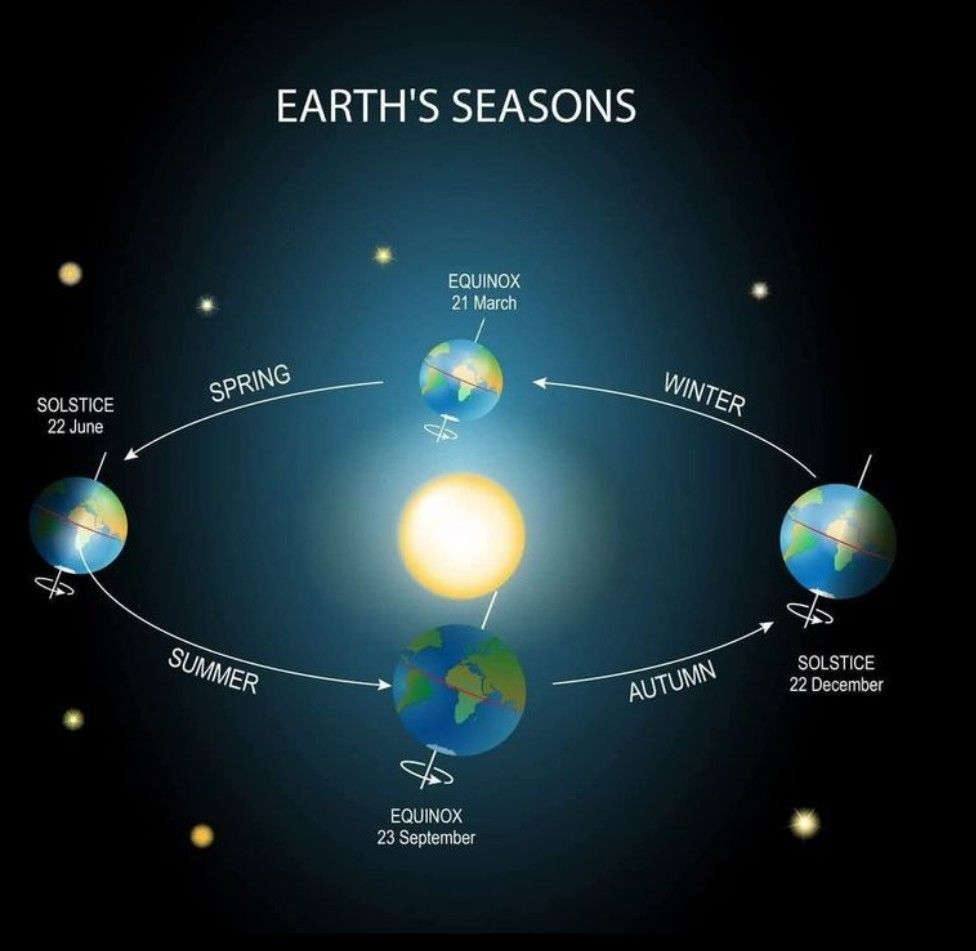
The cycle of the Sun represents the cycle of our lives and reflects the natural flow of energy moving inward and outward. There are times to grow, times to pause, times to shed, and times to learn.

Just as we align with the Moon’s journey every month, we also align with the Sun’s journey throughout the year.

The Druids, ancient Egyptians, ancient Greek, ancient Romans, Indigenous Europeans, Northern European Civilisations, Mayans, Olmecs, Chinese, Chumash Indians of California, Australian Aborigines, and many others have aligned their ancient monuments and sacred sites to the solstices and equinoxes and conducted ceremonies on these days.

For example: At the Great Pyramids of Egypt, on summer solstice, the sun crowns the head of the Sphinx.

When the sun’s first light breaks through, on the day of the summer solstice, it hits the monument of Stonehenge directly in the centre, lighting up each pillar.

On Easter Island, fifteen of the giant stone statues, called Moai, face the summer solstice sunset.

A giant serpent mound in Ohio, in the United States, faces the summer solstice sunset.

Two of the thirty caves at Ajanta in India capture the sunlight on the solstices. When this happens the sacred Buddha statues they contain are illuminated.

Symbols used at these ancient sites represent spiritual processes around cosmic events which indicate ancient practice of ceremonial celebrations on the solstices and equinoxes.

Moreover, the knowledge encoded in these ancient sites tells us that what happens above is related to our world below, and most importantly, to ourselves. They show a link between the human and the divine, the personal and the cosmic, the inner and the outer world.

The Summer Solstice is thus the symbolic continual journey we travel from darkness to light. A reminder that there is hope in the world, that the light within can spread to the far reaches of the world and inspire others. It is a call to work on our limited internal dynamics and cultivate the light within.

Thus, a fire lit during the Summer Solstice invites us to turn inward, to celebrate the light of wisdom within ourselves and others, and to reflect upon the potential for our consciousness to awaken.

Because summer solstice symbolizes enlightenment and awakening, a fire lit on this day is a call to honor the wholeness of Being and the spiritual source from which consciousness originated.

Why We Lit the Fire in the Swiss Alps 

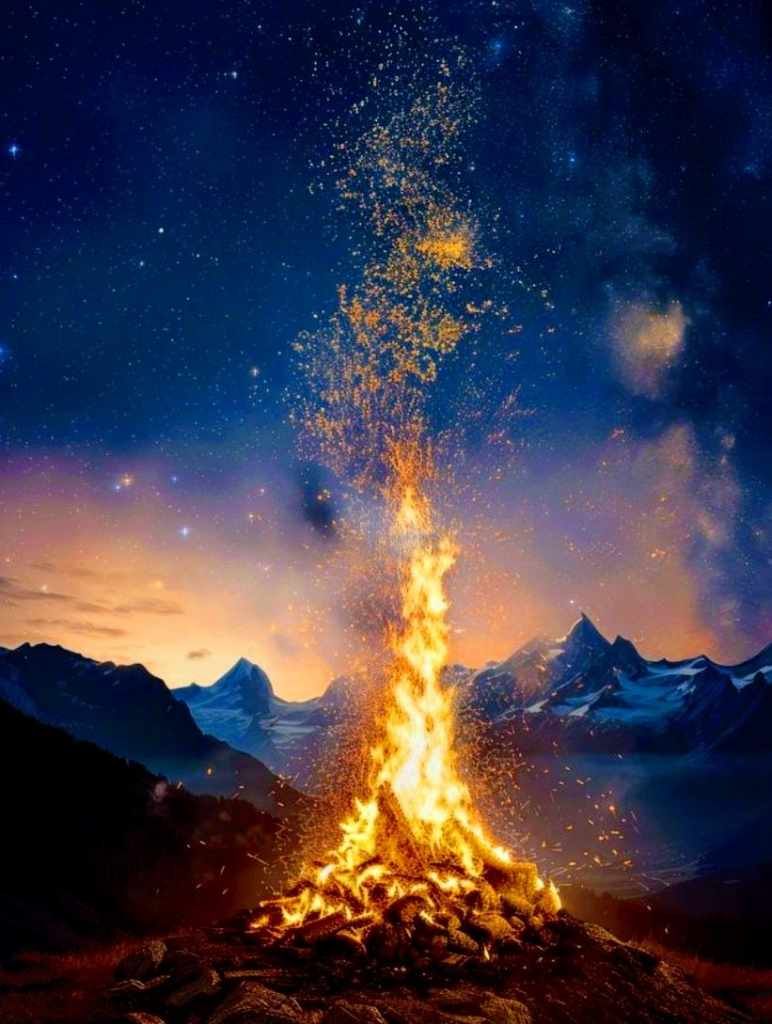
Mountains have held a profound and persistent place in humanity, functioning across cultures as more than physical landscapes and acting as sacred symbols that link the earthly and the divine. Seen as towering and awe-inspiring, peaks often serve as cosmic centers or world axes that bridge heaven, earth, and the underworld. This verticality and remoteness lend mountains an otherworldly quality that makes them natural sites for encounters with supernatural power, divine beings, and transformative experiences.

Across mythologies and spiritual traditions, mountains appear in many interrelated roles: as abodes of gods and spirits, as natural temples and pilgrimage destinations, as sources of life-giving water and fertility, and as burial places or origins of ancestral spirits.
Capture 2026 05 18

They lend communities a sense of identity and unity, anchoring social boundaries and serving as protective guardians. Shamans, priests, and seekers frequently draw power, knowledge, and inspiration from mountains—treating them as places of revelation, initiation, and spiritual renewal.

Stories throughout time recount journeys to particular peaks, rituals that “dress” or anchor mountains, and the naming of summits after deities or cosmological features that continuously recreate a mountain’s cultural significance.

These narratives help communities explain natural phenomena, define territorial and social order, and transmit collective memory. In this way, mountains become living repositories of meaning—sites that offer belonging, guidance, and responses to life’s challenges.

Ultimately, mountains are both physical and symbolic landscapes: they shape practical realities (water sources, boundaries, resources) while also hosting rich spiritual worlds.

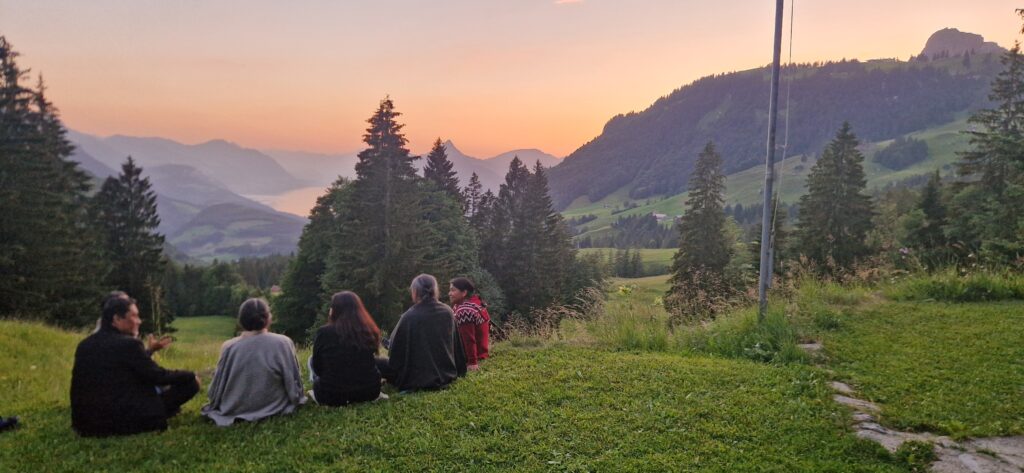
Lighting the Unifying Ancestral New Fire in the Swiss Alps is a practice that highlights humanity’s enduring need to root existence within a larger cosmology, making the ceremonial mountain an anchor for our shared beliefs, identity, and search for transcendence.

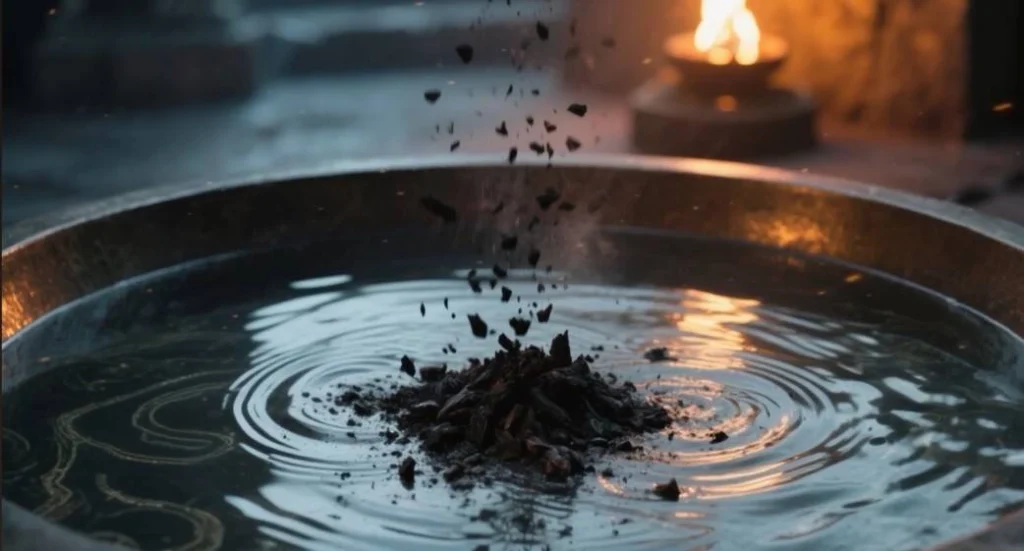
Why We Incorporated Ancient Ashes from Around the World to Light the Fire
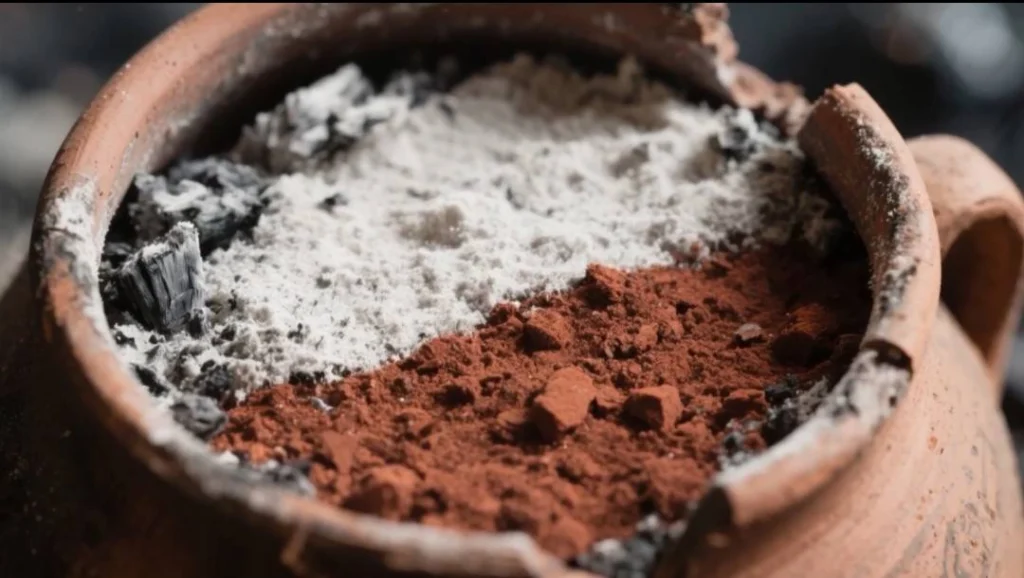
Our stories flicker, dance, consume and are consumed, transform and are held in fire. Through rain, drought, hardship, trade, turmoil, or prosperity, ancient carriers of sacred ash believe, with unshakable conviction, that fire is the most reliable witness to time. That a flame, if tended in the right conditions, could become the living memory of a people.

The ember and ash keepers understand flame in three sacred aspects:

First, as a witness that sees everything offered to it. Every prayer whispered to it and every moment of joy or despair expressed before it. Second, as a historian, it transformed what the wood witnessed: the oils and the ceremonial objects into a new substance, ash. This ceremonial ash, they believe, holds the essence of the events the fire consumed. & Third, as a purifier. It burns away falsehood, leaving only the condensed truth of an era preserved in layered cinders.

These guardians are known as the keepers of ash and amber. Protectors of a history written not on scrolls, but in the fragile layered dust of centuries. The dedication required for this practice is immense. They source specific wood, for specific ceremonies knowing that the resulting ash will tell a different story. For example, acacia wood is for harvest festivals. They record everything. The wood type, the oils used, and the items consumed by the flames are noted, creating a cross reference for the ash itself. All of their work revolves around the sacred task of tending to the eternal flame and conserving the embers and ash.

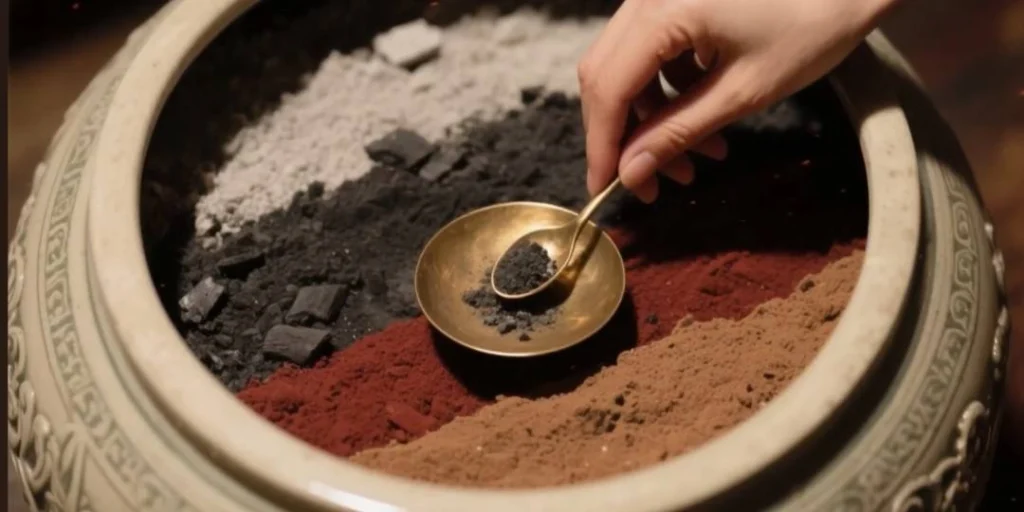
In ancient times, the ash gathered created an astonishing archive of ash where history was read through color, texture, & scent. For example, a reddish layer might speak of a season of war and blood shed; and white ash of a prosperous year and peace.

Sacred amber and ash holders trust the process of the constant, present act of tending a transformation. They believe that true history is not a static monument, but a continuous burning; a conversation between the consumed past and the consuming present.

Around the world the ashes from sacred fires or cremated offerings symbolize spiritual purification, transformation, transcendence, and connection to divine light.

In various ancestral spiritual traditions, the resulting ash from sacred fire facilitates spiritual cleansing, physical healing, and balance between body, mind, and spirit.

Generally, sacred ashes are ritually consecrated remnants of burnt offerings or sacred materials, employed across multiple spiritual traditions to symbolize memory, purity, mortality, transformation, divine protection, and transcendence.

As we get ready to light the Unifying Ancestral New Fire in Europe with ancient ceremonial ashes from around the world, let us embrace the sacred ceremonies recorded in these ashes; let us welcome the keepers of those stories and the wisdom they share. Let us pause and consider that our small flame, lit on this night, is an echo of humanity’s eternal flame, which is carried in the ashes it lights upon; a tiny cousin holding its own small memory in its glowing heart.

Working with ancient sacred ashes, from different traditions from around the world, to light the Unifying Ancestral New Fire is an act of remembrance; A coming together of the ancestral memories of humanity; An attempt to establish a continuation of the ancient way to commune with the divine, to grow, and unite in our shared humanity of compassion, wisdom, and love, which is contained in the memories and essence of those ashes and which will be carried forward through the unified ashes of our fire.

– Crizalia

Why 3 Smoke Offerings Were Made
Ancestral traditions teach that wisdom does not simply descend upon those who merely sit before a sacred fire. Rather, there exists a sacred protocol of preparation—a dedicated period of purification and inner alignment that harmonizes the practitioner with the ceremony’s purpose.

In most ancestral traditions, this preparation unfolds over days of prayer, fasting, cleansing, and purification before the sacred fire is lit. These preliminary rites often include smaller ceremonies or offerings made in advance of the main event. Only when the spirits have accepted and blessed these preliminary acts does the main ceremony commence—a sacred unfolding granted through divine permission.

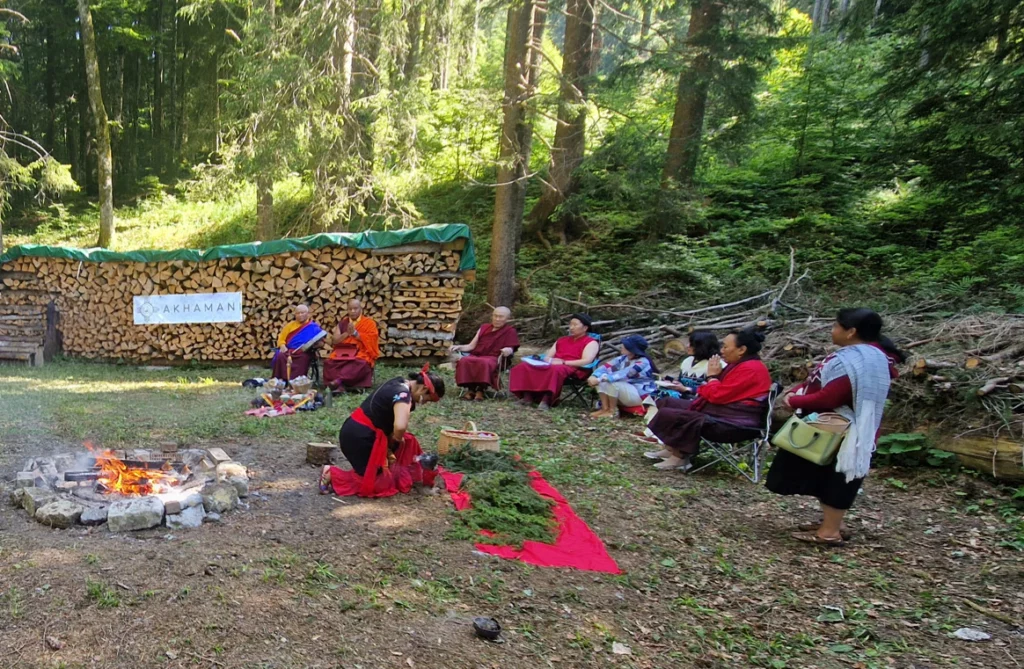
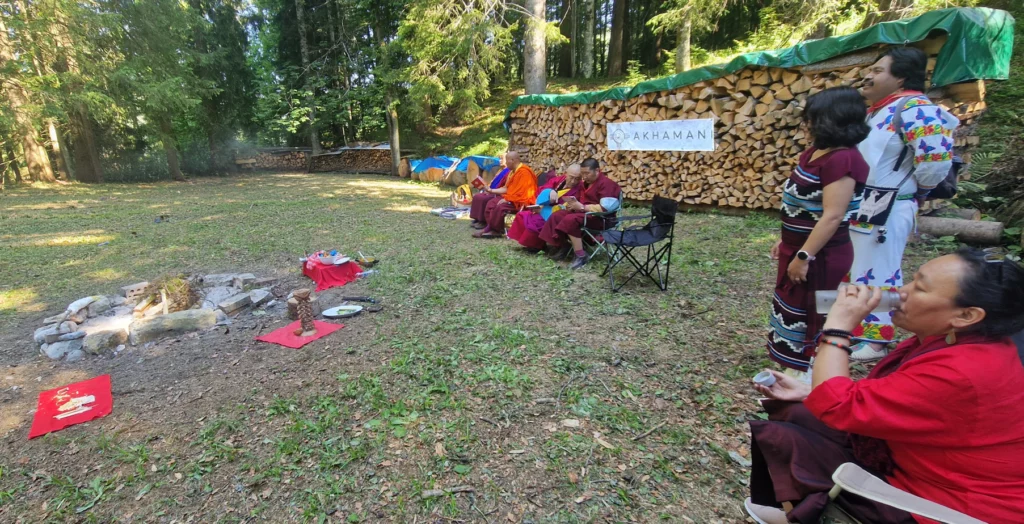
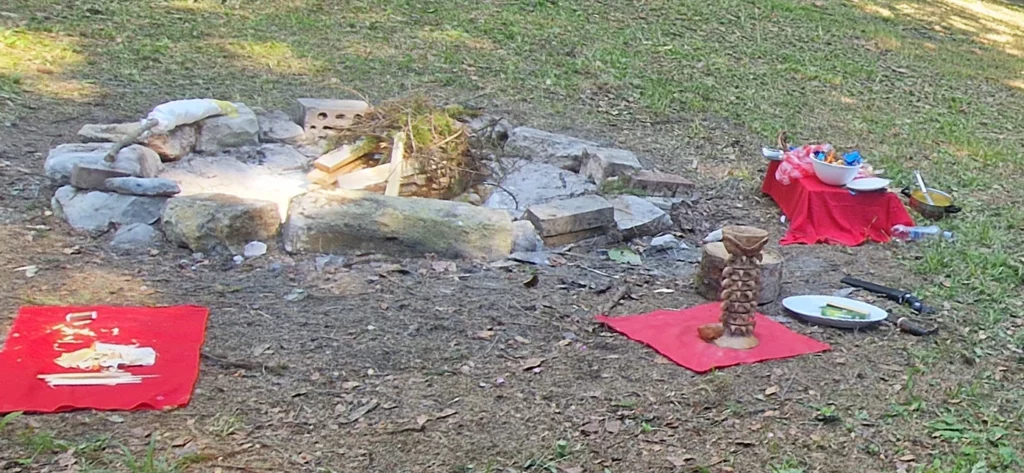
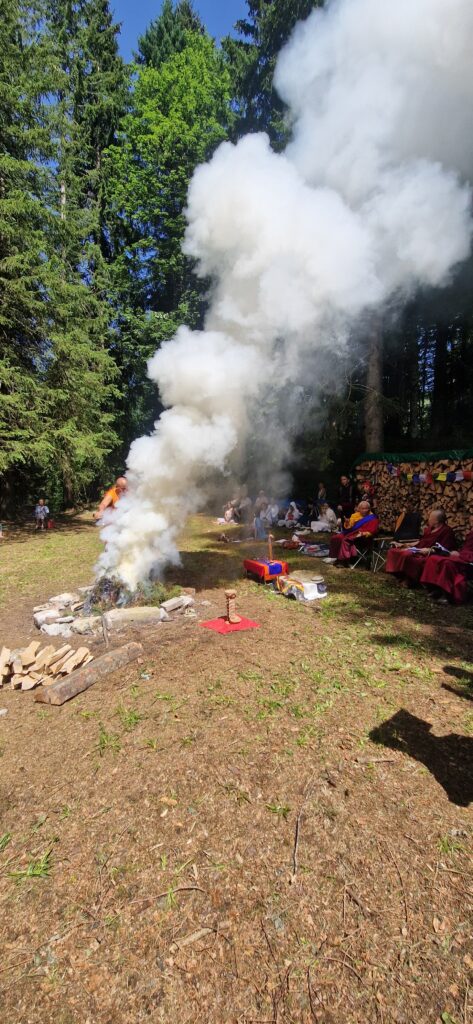
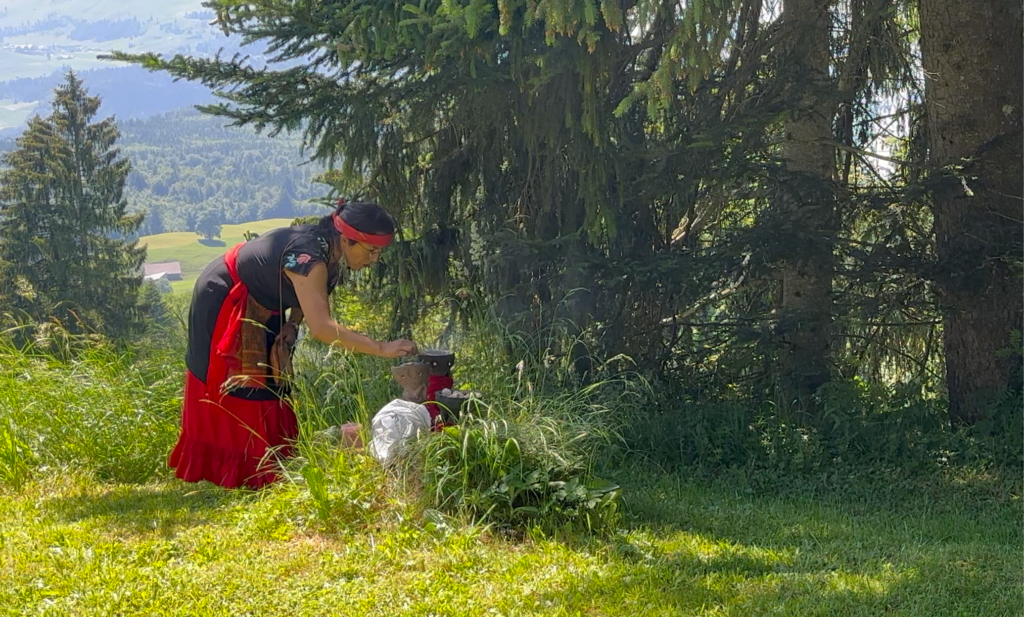
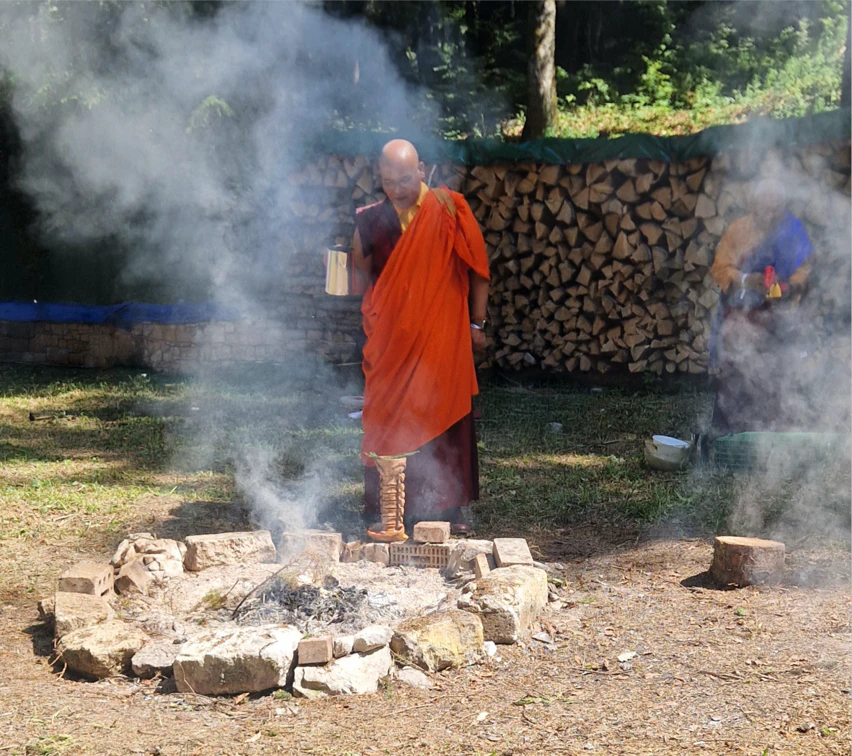
This is why, during the Unifying Ancestral New Fire in Switzerland, Venerable Khenpo Tsultrim Tenzin Rinpoche, Venerable Khenzur Nyima Wangyal Rinpoche, Venerable Lovon Lama Shagdarsuren Bayanjargal, and Venerable Amarzul Purevdorjor recited mantras, performed prayer practice, fasted, and meditated at specific moments of the day. This was done in preparation to perform three smoke offering ceremonies: to clear the way for the harmonious and balanced unfolding of our gathering, to call in the Fire Spirit (deity) & make proper offerings for an auspicious unfolding of our ceremony, and to maintain reciprocity between all present and the local guardian spirits of all lineages. The smoke offerings were done in the morning, and continued for three days until the lighting of the main fire ceremony. The Mexican wisdom keepers, Crizalia, & Jonas  also made various offerings and rituals daily to the local spirits and ancestors.

Why We Performed Purification Rituals
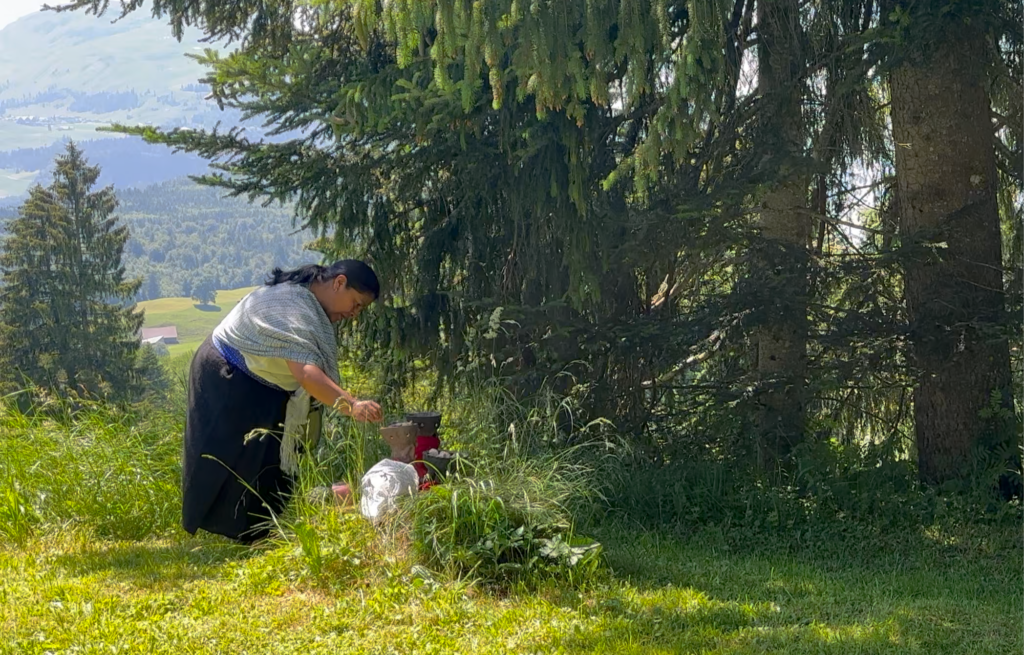
Water rituals were performed daily, at specific times, for purification and balance of fire and water by Crizalia, the Water lineage holders of Central and Southern America, & our water aspirants (Felix & Tamara). Equally, the Sahumadoras, fire women of Mexico, rigorously smudge our ceremonial spaces and everyone present throughout each day of our gathering and through all rituals and ceremonies performed. This ensured the purity and balance of our time together. Additionally, the Mongolian and Siberian shamans occasionally burned fermented dung to generate cleansing smoke during our gathering. To calm the minds & moods of practitioners, Gazom Lhamo, Maria Juana, Gabriela, Leobardo, Chimgee, Ilin, & Amir performed occasional songs & chants during rest times. 
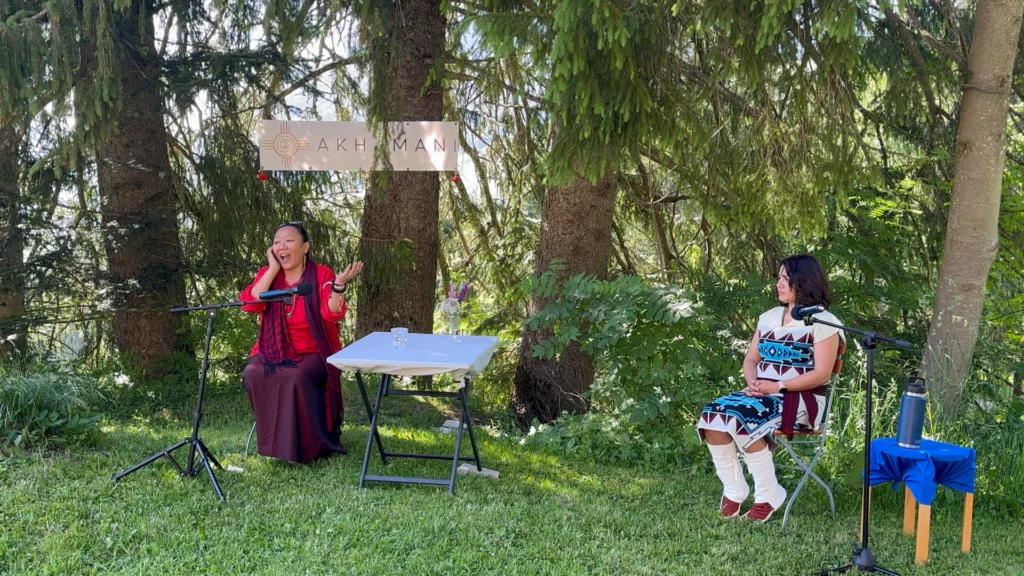
Why We Practiced Silent Meditation During the All Night Fire Ceremony 
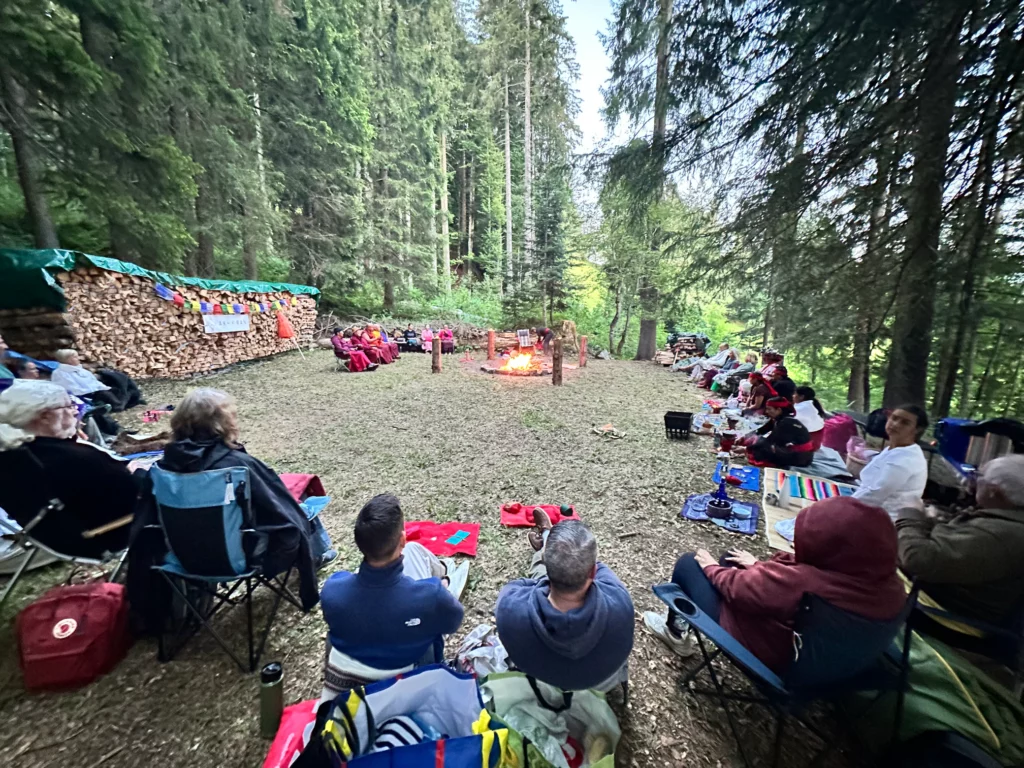
Simply put, it’s because ancient Civilizations Meditated in Silence Around the Sacred Fire in Ceremony.

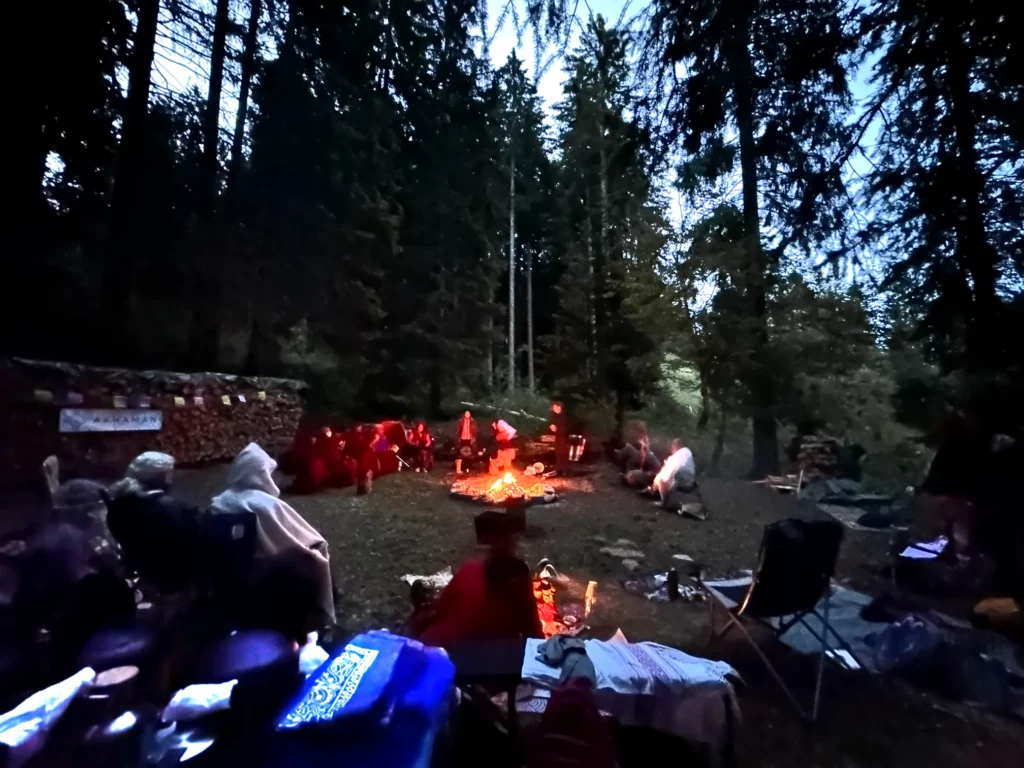
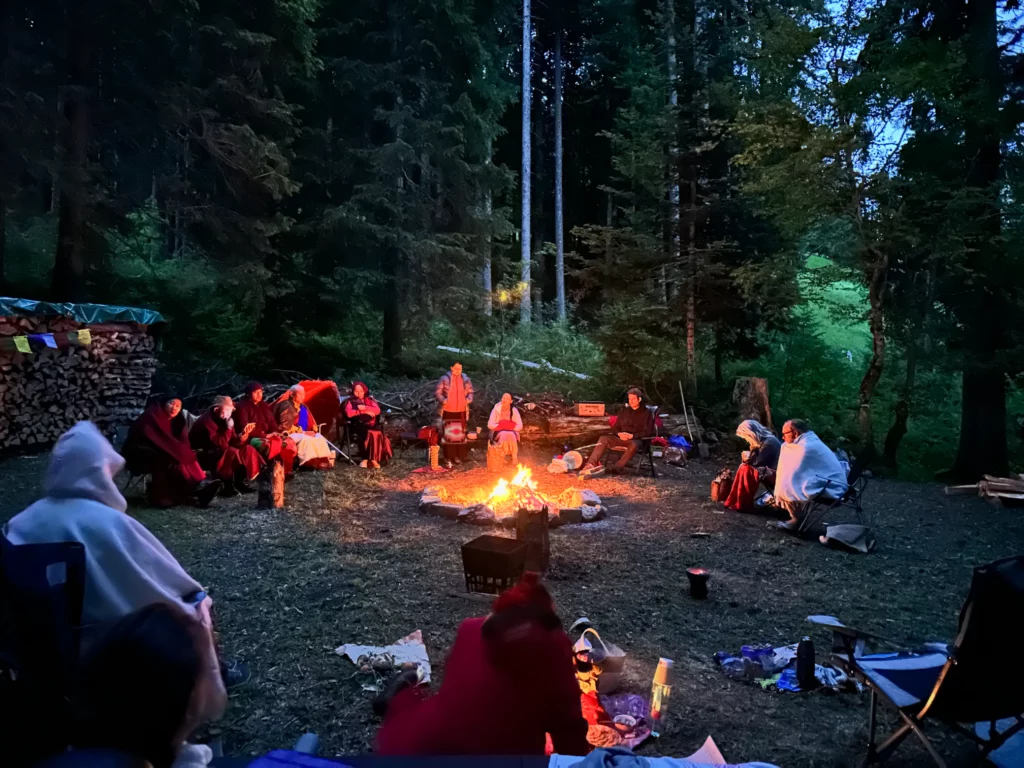
Though separated by oceans and centuries apart, the fire-centered wisdom teachings of ancient cultures followed remarkably similar structures. At their core was the circle—a shape that has symbolized unity, eternity, and the cosmos since the dawn of humanity. Practitioners sat in a ring around the fire, their faces illuminated by its glow, creating an environment where every face could be seen rising from the active silence and the wisdom that it communicated about those present. 

Across the ancient world, fire was far more than a mere source of warmth—it was a living presence, a sacred bridge between the earthly and the divine, a force of purification and revelation. From the mist-shrouded groves of Celtic Europe to the temples of Egypt, to the Vedic fire altars of India to the communal hearths of Native American tribes, humanity gathered around flames not just to survive the night, but to connect with something greater than themselves. 

The practice of meditating in silence around a sacred fire was a universal phenomenon, a shared language of the soul that transcended cultural boundaries. In the quiet crackle of burning wood and the steady dance of embers, ancient peoples found a mirror of the cosmos, a purifier of the spirit, and a gateway to wisdom beyond ordinary perception.

One of the most profound purposes of fire meditation was spiritual connection and divine communication. Fire was not merely an element to be controlled—it was a living entity, a messenger between the human realm and the Great Mystery, Deities, Spirits, and Energies. In the Vedic tradition of ancient India, the sacred fire Agni was revered as the “mouth of the gods,” the divine carrier of prayers and offerings. When sages and seekers sat in silent meditation before the flames, they were not just warming themselves—they were attuning to higher consciousness, opening a channel through which the will of the deities could be perceived. Similarly, in the fire temples of Zoroastrian Persia, the eternal flames were tended in reverent silence because they are believed to reflect the uncreated light of Ahura Mazda, the supreme god of wisdom. The Greek hearth cults, too, understood fire as a sacred intermediary; the hearth of the home, tended by the Vestal Virgins in Rome, was the spiritual center of the city, where the flame of Vesta—goddess of the hearth—burned as a perpetual connection to the divine. In each of these traditions, silence was not emptiness, it was a vessel for presence, a way to strip away the noise of the world and listen to the whispers of the sacred.

The transformative power of contemplating silently around the sacred fire, or wisdom fire made it an unparalleled practice of purification and renewal. Its ability to consume, to burn away what was no longer needed, mirrored the spiritual journey itself—where ignorance, ego, and impurity were gradually shed to reveal the pure essence beneath. In the Shinto tradition of Japan, sacred fires were lit in purification rituals (harae), where practitioners would stand before the flames to cleanse themselves of spiritual pollution before & during prayer or meditation. The flames were believed to reflect impurities back to the seeker, allowing for honest self-assessment and release. Among the ancient Celts and Norse, bonfires blazed during rites of passage—initiation ceremonies, seasonal festivals like Samhain or Beltane, and vision quests— to burn away old identities, preparing the individual for rebirth into a new state of being. Even in the harsh landscapes of Scandinavia, the völvas, or seeresses, would sit before fires to cleanse the mind of distractions, allowing visions of fate and destiny to emerge from the smoke and flame. In these practices, fire was not just a tool for purification—it was a living alchemy, transmuting the base metal of human limitation into the gold of spiritual clarity.

For many ancient cultures, fire was also a microcosm of the cosmos, a reflection of the sun’s life-giving power and the natural order that governed existence. The Hindu ritual of Agnihotra, performed at the precise moments of sunrise and sunset, was a meditation in itself—chanting sacred mantras while gazing into the flames to align with the solar cycles, the eternal rhythm of creation and dissolution. Native traditions around the world echoed this understanding. Native American tribes, from the Lakota to the Hopi, worked with fire in vision quests and meditative trances to commune with the rhythms of nature, seeking guidance from the land, the ancestors, and the unseen forces that shaped their world. For the Aboriginal peoples of Australia, fire was a mirror of the Dreamtime, the ancestral era where time itself was fluid; sitting before a fire, they believed, allowed them to perceive the eternal now, where past, present, and future were one. 

Wherever we looked, from whoever we learned, for the ancestral traditions around the world, fire was not separate from the natural world—it was a practitioner in it, a living symbol of the interconnected web of life that sustained all beings. An energy with which one communes with in silent connection to learn deeper realizations of self and creation. The sacred communication between the earthly and the divine. 

Beyond all, fire was a unifying force, a sacred center around which communities gathered to share wisdom, heal, and reflect. In the vast landscapes of Africa, from the Yoruba of West Africa to the San of the Kalahari, communal fires served as the heart of village life, where stories were told, conflicts resolved, and silent reflection practiced in the flickering light. Native American tribes, too, understood the fire as a shared sanctuary; whether in the longhouses of the Iroquois, the sweat lodges of the Plains tribes, or the council fires of the Cherokee, the flame was a sacred space where individuals could step away from the noise of the world and reconnect with themselves, each other, and the spirit of the land. In these gatherings, silence was not isolation—it was a form of communion, a way to listen not just to the fire, but to the wisdom that arose from the stillness within.

Fire’s most enduring blessing, however, is  the light of wisdom—the dispelling of darkness, both literal and metaphorical. In the Buddhist and Hindu traditions, the Dipa, or oil lamp, was lit during meditation to represent the dissipation of ignorance, the flame of knowledge burning away the shadows of the mind. The ancient Egyptians understood fire as a purveyor of enlightenment; in the temple sanctuaries (Hwt-ntr), priests would meditate before sacred flames to prepare for communion with Ra, the sun god, whose light was the source of all wisdom. Even in the Norse tradition, the fire of Muspelheim—one of the primordial realms—was seen as the embodiment of divine knowledge, a force that would illuminate the truth of Ragnarök, the twilight of the gods. In each of these traditions, fire was not just a source of physical light—it was a beacon of inner illumination, a reminder that wisdom was not something to be acquired, but something to be awakened from within.

Before the deepest states of meditation could be reached, however, there was often a ritualistic preparation—a period of silence and stillness around the fire to quiet the mind and open the heart. In ancient Egypt, priests would meditate in the temple sanctuaries near sacred flames, allowing the heat and light to purify their thoughts before attempting to commune with the deities. The Druids of Celtic Europe, who gathered in sacred groves called nemetons, worked with fire in their rituals for divination and silent contemplation, believing that the crackling flames could reveal hidden truths to those who listened closely enough. The Zoroastrians, too, understood the importance of preparation; before entering the presence of the sacred fire in their temples, practitioners would spend time in silence, calming the mind and focusing the spirit, so that when they finally sat before the flames, they were ready to receive the fire’s wisdom.

This preparation was not merely a ritual— it was an act of surrender,
a way of saying,
“I am ready to listen.”

At the heart of all ancestral fire ceremonies that we were invited to be part of, from around the world, is silence—not as an absence of sound, but as a presence of attention, of connection, of respect, of transformation, of becoming, & of unification. The crackling of the fire became a natural mantra, its rhythm guiding the breath and focusing the mind. The stillness around the flames mirrored the purity of the fire itself: unmoving in its essence, yet alive with energy, a paradox of tranquility and power. 

In the silence, the mind could finally hear the whispers of the sacred, the quiet truths that were drowned out by the noise of daily life. The ancient Greeks understood this well; the Oracle of Delphi, before delivering her prophecies, would sit in silence before the sacred flame, allowing the fire to speak through her in a voice that was not her own. The Celts, too, knew that silence was the language of the Otherworld, the realm of gods and ancestors, where words were unnecessary and wisdom was transmitted directly through the heart.

To sit in silence around a sacred fire today is to participate in a tradition that stretches back to the earliest days of the sacred fire ceremony. It is to reclaim a piece of our ancient heritage, a way of knowing that does not rely on books, screens, words, or other forms, but on the living presence of fire and the stillness of the soul. In a world that is increasingly fragmented and noisy, the practice of fire meditation offers something rare and precious – a return to the sacred center, where wisdom is not sought but remembered; where light is not turned on but awakened. The flames still burn. 

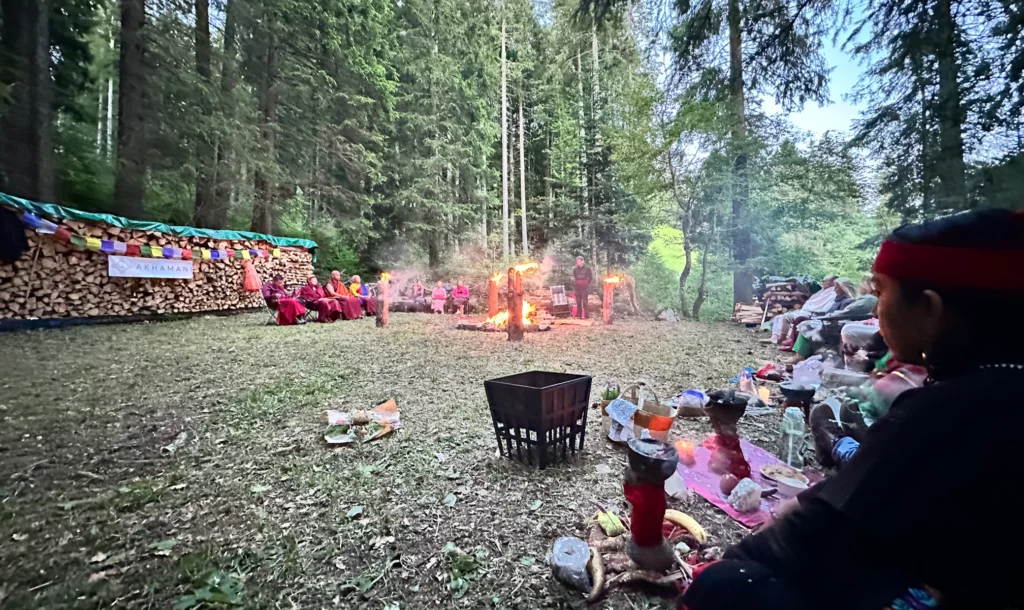
It is based on this understanding, and as instructed by the ancient fire keepers of the world that have guided us along this journey over several years, that we structured the Unifying Ancestral New fire as a silent communion/meditation between the Wisdom Fire and practitioners. 

The question is not whether they will speak, but whether we are ready to listen.

Listening: the Art of being in Sacred Silence

In the quiet glow of a sacred fire, ancient wisdom whispers through the crackling flames. Around this fire, silence is not an absence of sound but a presence of profound depth—a sacred space where the soul can listen, the heart can feel, and the mind can transcend. In countless ancient traditions, from the Vedic Agnihotra rituals of India to the sweat lodges of Native American tribes, the fire ceremonies of Zoroastrianism, and the ancestral rites of native cultures worldwide, silence during fire contemplation is not optional; it is essential. It is the vessel that carries prayers to the divine, the key that unlocks ancestral wisdom, and the sacred container in which transformation occurs. 

Silence as the Language of the Sacred

In many traditions, fire is considered to respond to reverence, intention, and purity of heart. Words, no matter how heartfelt, can often clutter the space between the speaker and the sacred. Silence, on the other hand, is the language of the divine. It is the stillness that allows the fire’s energy to penetrate the depths of the soul, where words are unnecessary and even inadequate. In the silence, the fire’s light becomes a mirror, reflecting not just the physical flames but the inner flames of the practitioner—their hopes, fears, and unspoken prayers. The Lakota people, for instance, speak of wakan, the sacred or holy, which cannot be fully captured in words. Silence is the way to encounter wakan in the fire, to feel its presence without the interference of language.

Silence as a Path to Presence and Awareness

The human mind is a whirlwind of thoughts, worries, and distractions. In the midst of daily life, it is nearly impossible to hear the whispers of the ancestors or the guidance of the spiritual realm. The sacred fire demands presence, and silence is the tool that quiets the mental chatter, allowing one to fully arrive in the moment. When practitioners sit in silence around the fire, they are not just waiting for the next part of the ceremony—they are practicing a form of meditation, a surrender of the ego’s constant need to speak, to control, or to fill the space with noise.

In the Native American tradition of the sweat lodge, silence is observed during the darkest moments of the ceremony, when the practitioners are in the deepest state of introspection. The fire keeper may sit in silence, allowing the heat and the darkness to strip away the layers of the self. The silence is not empty; it is full of potential—full of the voices of the ancestors, full of the wisdom of the earth, full of the unspoken truths that rise to the surface when the mind is still. This silence is a form of active listening, where the fire becomes the teacher, and the practitioners become the students. 

Silence as an Act of Reverence and Humility

Silence, in the presence of a sacred fire, is an act of reverence—a way of acknowledging that the fire is not ours to command but a force far greater than ourselves. It is a reminder that we are but humble practitioners in a ritual that has been passed down through generations. In the Zoroastrian tradition, the Atash (sacred fire) is treated with the utmost respect. The priests who tend the fire do so in silence, moving with deliberate care, speaking only when necessary, and always in a tone of reverence. 

Silence is also an expression of humility in the face of the unknown. The fire carries messages from the spiritual realm, but these messages are often subtle—felt rather than heard, seen in visions rather than spoken aloud. To fill the space with words is to drown out the whispers of the ancestors, to miss the signs that the fire is trying to convey. Silence, therefore, is an act of surrender—a recognition that some truths cannot be forced into words but must be experienced in the quiet of the heart.

Silence as a Bridge to Ancestral Wisdom

The ancestors are often closest to us in the silence. In many ancestral traditions, the fire is seen as a portal to the spirit world, a place where the veil between the living and the dead is thin. But this veil can only be crossed in silence. Words can create barriers; they can limit the experience to what the mind can comprehend. Silence, on the other hand, opens the door to the ineffable—the realm where the ancestors dwell. 

The Aboriginal peoples of Australia, for instance, have long worked with fire in their sacred ceremonies as a way to connect with the Dreamtime, the eternal now where the ancestors walk. In their fire rituals, silence is not just a pause—it is a sacred duty. Practitioners sit in quiet contemplation, allowing the fire’s smoke to carry their prayers to the ancestors and to bring back the wisdom of the past. The Didgeridoo, when played in these ceremonies, is often accompanied by silence, creating a rhythm that mirrors the heartbeat of the earth itself. This silence is not empty; it is alive with the presence of the ancestors, their stories, and their guidance. 

In the Celtic tradition, fire was used in rituals to honor the Aos Sí, the spirits of the Otherworld. The Celts believed that the dead did not speak in words but in omens, in the flight of birds, in the rustling of leaves, and in the play of flames. Silence was essential for reading these signs, for understanding the messages that the ancestors were sending. To speak over these subtle communications was to miss the wisdom that the fire was trying to convey. 

Silence as a Catalyst for Personal and Collective Transformation

The sacred fire is not just a symbol of purification—it is a catalyst for transformation. But transformation cannot occur in a space cluttered with noise, whether external or internal. Silence is the crucible in which the old self is burned away, making space for the new. When practitioners sit in silence around the fire, they are not just observers; they are practitioners in a sacred alchemy. The fire’s heat and light purify the mind, the emotions, and the spirit, but it is the silence that allows this purification to take root.

In the Buddhist tradition, silence around the fire (as seen in some Vajrayana practices) is a way to cultivate samadhi, a state of deep meditative absorption. The fire becomes a focal point of concentration that leads the practitioner beyond the distractions of the mind. In this silence, the boundaries between the self and the sacred dissolve, and the practitioners may experience a glimpse of enlightenment. 

Silence as a Unifying Force in Communal Ceremonies

In communal fire ceremonies, silence serves an even greater purpose: it unites the practitioners in a shared experience of the sacred. When a group gathers around a fire in silence, their individual energies merge into a collective field of intention and reverence. This unity is not about uniformity of thought or belief but about a shared openness to the spiritual realm. Different voices, different languages, and different cultural expressions may be present, but in the silence, they all speak the same language—the language of the heart.

In modern interfaith or multicultural fire ceremonies, silence becomes a bridge between traditions. When practitioners from different backgrounds sit together in silence around the fire, they are not just honoring their own lineage—they are honoring the sacred in one another. The silence becomes a shared language, a way of acknowledging that the fire’s light shines on all equally, regardless of cultural background or spiritual belief. 

The Fire’s Lesson: Silence as a Way of Life

The sacred fire teaches us that silence is not merely a part of the ceremony—it is a way of life. In a world that is increasingly noisy, where words are often used to fill space rather than to convey meaning, the fire reminds us of the power of stillness. It shows us that true communication with the divine, with the ancestors, and with our own deepest selves does not require words. It requires silence—silence to listen, silence to feel, and silence to surrender.

In the end, the silence around the sacred fire is not an absence but a presence—a presence of the divine, of the ancestors, and of the unspoken truths that lie within us all. It is the space where the fire’s magic unfolds, where prayers are heard, and where transformation becomes possible. To honor the fire with silence is to honor the sacredness of life itself. It is to remember that some of the most profound truths cannot be spoken—they can only be felt in the quiet of the heart, in the stillness of the soul, and in the sacred dance of the flames.

Meditative Fire Practice Helps the Union of Spirit & Mind

The multisensory & transformative nature of fire makes it an effective vessel for wisdom. Unlike a static mirror or a book, fire is alive—it moves, it speaks in crackles and hisses, it responds to the wind, the wood, the water, the elements in general. This dynamism makes it uniquely suited for active learning and spiritual exploration.

Psychologically, the flickering flames induced a trance-like state, a phenomenon well-documented in modern neuroscience. The irregular, rhythmic patterns of firelight engage the brain’s default mode network, the same system active during meditation and deep introspection. This makes practitioners more receptive to teachings, more open to revelation, and more capable of remembering what was shared. The heat and light also create a sense of safety and intimacy, breaking down social barriers and allowing even strangers to speak as equals.

Spiritually, fire was a symbol of transformation. It consumed yet did not destroy; it gave warmth yet could scorch; it illuminated yet cast shadows. In this paradox lies its power as a teacher. Around the fire, old ways could be burned away, making room for new understanding. This made it the perfect setting for initiation rituals, where seekers underwent symbolic death and rebirth, emerging with new names and new responsibilities.

Across cultures and millennia, meditation with fire was not merely a spiritual exercise—it was a holistic practice that united the mind, the body, and the spirit in a single, luminous flame. This union was not accidental; it was cultivated through intention, ritual, and deep attunement to the fire’s living presence. The wisdom that arose from these practices was not abstract philosophy but embodied truth—a lived understanding of existence that transcended the boundaries of the self. 

The Union Realized: Mind, Body, and Spirit in Harmony

When the mind, body, and spirit were fully engaged in meditation with the fire, a profound union emerged—one that ancient traditions described in different ways but recognized as the same essential truth.

The Mind: In fire meditation, the mind was not suppressed or controlled but guided into a state of one-pointed focus. The fire’s light and movement became an anchor, a way to quiet the chatter of the ego and enter a state of deep presence. The ancient yogis of India called this dharana (concentration), a precursor to dhyana (meditation) and samadhi (absorption). The mind, in this state, was not lost in thought but illuminated by the fire’s light. It became a mirror, reflecting the practitioner’s true nature and the interconnectedness of all things.

The Body: The body, in fire meditation, was not an obstacle but a sacred vessel. Its stillness, its breath, its sensory engagement—all were tools for spiritual awakening. The ancient Egyptians, for example, believed that the body was a microcosm of the universe, and the fire was a way to align the two. The practice of ib (mindfulness) in ancient Egyptian tradition involved sitting before a sacred flame, allowing the body’s natural rhythms to synchronize with the fire’s pulse. The breath became slow and deep, the heartbeat steady and calm, and the practitioner entered a state of ka (spiritual essence) union. 

In Native American traditions, the body’s response to the fire—whether through sweat, tears, or trembling—was seen as a sign of the spirit’s movement. The body was not to be controlled but listened to, its sensations are a language of the soul. The union of mind, body, and spirit was not about transcending the body but about honoring it as a sacred instrument. 

The Spirit: The spirit, in fire meditation, was nourished by the sense of connection to the divine. The fire was not just a tool but a companion, a guide, and a teacher. In the Zoroastrian tradition, the Atash Behram (victorious fire) was believed to be a living entity that could bestow spiritual insight on those who meditated before it with a pure heart. The practitioner’s spirit was not separate from the fire but a part of its eternal flame.

In the Celtic tradition, the hearth fire was a symbol of the Otherworld, the realm of the gods and ancestors. To sit before the fire was to enter into communion with these beings, to receive their wisdom and blessings. The spirit, in this state, was not an individual entity but a thread in the great tapestry of existence.

The union of mind, body, and spirit in fire meditation was not a theoretical concept but a lived experience. It was the realization that these three aspects of the self were not separate but interconnected, like the three strands of a braided cord. The fire, in its warmth and light, was the catalyst that revealed this truth. 

Returning to the Flame

The wisdom of the sacred fire is not found in books or doctrines but in the quiet moments of stillness, in the warmth of its light, and in the union of mind, body, and spirit that it facilitates. To meditate with the fire is to remember what it means to be fully human—to be a being of light, of warmth, and of connection.

In the words of the poet Rumi, “Be like a candle. Burn, and give light to others.” The fire does not burn for itself; it burns to illuminate, to purify, and to unite. And so, too, does the practitioner who sits before it in meditation. The ancient wisdom that flourished from this practice is not a relic but a living flame, waiting to be reignited in the hearts of those who seek its light.

Why We Practice: to Remember & Connect Back to the Fire Within

The most profound teaching of traditions around the world is that you are not separate from the fire. The same energy that burns in the flames burns in you—the fire of life, of transformation, of spirit, of creation. The ancient peoples did not see fire as something “out there” to be worshipped. They saw it as a manifestation of the divine fire within themselves.

The Vedic tradition speaks of Agni as the fire in the belly (jatharagni), the digestive fire that sustains life, and the fire in the heart (hridaya agni), the spark of consciousness. The Sufi mystics speak of the “inner fire” (Nar-i-Khudi), the divine spark that burns within every human being. The Native American traditions understand fire as the “breath of the creator”, the same breath that animates all life.

To “commune with” the wisdom fire is not just to approach an external force—it is to remember your own sacredness. The fire outside is a mirror of the fire within. The lessons it offers—preparation, reverence, listening, humility, reciprocity, transformation, respect, & unity—are not just about fire. They are a way of life.

The next time you sit before a flame, whether it is a candle on your altar or a sacred fire under the stars, remember:

  • The fire is alive
  • It sees you
  • It responds to your intention
  • It teaches you what you need to learn
  • And you, too, are fire

The flames are speaking, are you ready to listen?

The Ceremony is Not the Problem

There are people who spend years seeking out ceremonies— new songs, new altars, new teachers— as if the next ritual would finally be the one that changes them. But the depth of transformation does not depend on the ceremony. It depends on how much you are willing to leave behind.

The Native elders say: “The fire does not care if you are a chief or a child. It only burns what is false.”

The Buddha taught: “Peace comes from within. Do not seek it without.”

The light of the wisdom fire can show you the truth. It can open a door. It can remind you of who you are. But it cannot let go, on your behalf, of what you are still clinging to. It cannot abandon your excuses. It cannot give up your fears. It cannot walk the path for you.

And perhaps that is why some people go through a single ceremony and their lives are changed profoundly. While others go through a hundred… and keep returning to the same place. Not because the ceremony did not do its work. But because they are not yet willing to let go of what has already run its course.

Every transformation has a price.
And almost always, that price is an old version of ourselves.

Difference is Never the Ceremony

The sacred fire points out contradictions, exposes self-deceptions, and speaks the uncomfortable truth. It is the mirror that reveals the unsettling aspects and irritations of our ego. It reflects what is out of alignment and acts as the flame that burns away the limiting certainties we tend to carry. It is the ancient, wise light that compels us to look at something we might have preferred to keep avoiding or ignoring.

And when this happens, the truth catches up with us, and human beings react in very strange ways, revealing their true selves without masks. Our actions speak to who we really are, going far beyond the words we tell.

The sacred fire reveals the problems caused by ignorance and the inability to interpret its revelations. For when we turn something profound into a persona, we risk losing sight of its function, its message, and its revelations.

When this happens, people’s internal conflicts appear. Trying to draw attention to themselves. Believing that their perspectives are what matter most. 

The ceremony was never about appearing different or forcing difference onto others. Rather, it was about seeing, revealing, understanding, integrating, and transforming our differences through learning from each other and collaborating with each other. It was about expanding our perspectives, going beyond ourselves and lineages, and merging with the light of the wisdom fire. 

Remember, The Universal Fire Mandala is the mirror of who we truly are in action—beyond the masks of words. The truth of what needs work so that true unity can be achieved. 

Lessons We are Invited to Incorporate to Cultivate True Unity

Through the many ceremonies that we were privileged to be part of, to witness, and to learn from in our journey to the Universal Fire Mandala, we observed common core lessons that are an essential practice, in one way or another, across the globe, for the proper unfolding of any ceremonial intention. These include: Reverence, Humility, Reciprocity, Transformation, Respect, Unity, & Gratitude.  

During the Unifying Ancestral New Fire in Switzerland, we witnessed the monastics, the Mexican wisdom keepers, & the entire Akhamani team display exemplary behaviors that embodied these essential aspects of basic humanity and through that, the transformative power of the sacred fire ceremony. The following section outlines these core lessons. 

Reverence

The most fundamental teaching from ancient traditions is that fire is not to be taken lightly. It is not a convenience, nor a commodity. It is a living entity that should be revered. In the Vedic tradition of India, fire (Agni) is not merely an element, it’s a deity, one of the most sacred forces in the cosmos. The Rigveda describes Agni as the “mouth of the gods”, the one who carries offerings to the heavens and returns with divine wisdom. To approach such a being without reverence is to risk disharmony—not because fire is vengeful, but because disrespect creates a barrier to understanding. In the Zoroastrian tradition, where the sacred fire (Atar) is tended in silence and its flames never extinguished, fire is the visible manifestation of Ahura Mazda’s wisdom. To “come with” such fire is to approach it as one would approach a sovereign, with humility, gratitude, and an open heart.

In the traditions of the Lakota and other Native American peoples, fire is known as Wanáǧi Tȟáŋka, the “Great Spirit Fire,” a force that connects the seen and unseen worlds. Elders teach that fire is not owned or controlled, it is shared and honored. To misuse fire—to waste it, to treat it carelessly, or to approach it with arrogance—is to sever the connection between humanity and the natural world. The Maya of Central America speak of fire as K’iin, the sun’s breath, a sacred force that must be greeted with the same respect one would give to the rising sun. In these traditions, reverence is not a suggestion; it is the foundation of all spiritual work with fire.

During the Unifying Ancestral New Fire in Switzerland we practiced reverence to the fire by approaching it with intention, not out of habit or convenience; by speaking to it as one would speak to a teacher or an elder, with words of gratitude and respect. With peaceful and open minds; by recognizing that fire is not our servant, rather a wise teacher guiding us in the sacred work of transformation.

Humility

At the heart of every ceremonial practice lies humility: not merely as a virtue to be cultivated, but as the very foundation upon which the entire ceremony rests.

Humility begins with acknowledging the sacred hierarchy inherent in fire ceremonies. Fire is often revered as a deity, spirit, or intermediary between humans and the divine, and humility reminds practitioners that they are not the center of the universe, rather we are in humble service within a vast, interconnected web of existence. This acknowledgment fosters reverence and respect for the fire, the ancestors, and the spiritual forces being invoked. Without this humility, the ceremony risks becoming a tool for personal gain rather than a sacred exchange of energy and wisdom.

Central to the practice of humility is the act of letting go of the ego. The ego’s desires, attachments, and need for control can distort the purpose of the ceremony, turning it into a space of personal demands rather than a vessel for divine connection. Humility dissolves this illusion of separation, allowing practitioners to surrender their agendas and open themselves to the wisdom of the ancestors and the guidance of the spiritual realm. In this surrender, the fire ceremony becomes a space of true communion rather than a performance of attention.

Humility also cultivates deep respect for ancestral wisdom. These ceremonies are not about invoking ancestors for personal favors or superficial needs; they are about listening—opening the heart and mind to the lessons of the past and the guidance that can heal and assist the present. Humility allows practitioners to approach the ceremony with an open heart, ready to receive rather than demand. It is an act of deference to the ancestors, recognizing that their knowledge and experiences far surpass our own.

Fire is a purifier, and humility is its spiritual counterpart. In many traditions, practitionersenter the ceremony with a pure heart, free from arrogance, judgment, or selfish motives. Humility acts as a purifying force, burning away the impurities of the ego and leaving behind clarity, sincerity, and devotion. This purity is essential for the fire to carry prayers and offerings to the ancestors and local guardian energies effectively, ensuring that the intentions are aligned with the highest good.

Moreover, humility fosters a sense of collective, intergenerational connection, and ultimately unity in non-separation. Sacred fire ceremonies emphasize the interconnectedness of all life—past, present, and future. Humility dissolves the illusion of individualism, reminding practitioners that they are part of a larger tapestry of existence. This collective focus is particularly important in ancestral ceremonies, where the living honor the dead, and the dead, in turn, guide the living; & where we honor and make offerings to Local Guardians of all lineages. Humility fosters a sense of unity and shared responsibility, ensuring that the ceremony is not just about the individual but about the well-being of the entire community, lineage, all sentient beings and the cosmos at large.

The role of humility is woven into the very fabric of these ceremonies. Before the ritual, practitioners often engage in purification practices such as fasting, meditation, or bathing to cleanse the body and mind. These acts are not about achieving perfection but about humbling oneself and creating space for the sacred. Offerings to the fire are made with reverence, not as bribes or demands, but as tokens of gratitude and respect. Silence and listening are also integral parts of the ceremony, where practitioners practice humility by remaining still, quiet, and receptive rather than filling the space with words or distractions. This silence is an act of surrender, acknowledging that the wisdom of the ancestors and all energies present may not align with our desires.

Practitioners also acknowledge their limitations, recognizing that they do not fully understand the mysteries of the spiritual realm or the will of the ancestors. This acknowledgment fosters trust and openness, allowing the ceremony to unfold naturally rather than being forced into a predetermined outcome. At the end of the ceremony, gratitude is expressed to the fire, the ancestors, and the spiritual forces that were invoked. Humility is practiced by surrendering the results of the ceremony to a higher power, trusting that the ancestors and the divine know what is best for the individual and the community.

The broader spiritual significance of humility in these ceremonies reflects a universal principle that transcends cultural boundaries. It is the recognition that we are not the sole authors of our lives but are part of a vast, interconnected web of existence. This principle is echoed in many wisdom traditions: in Indigenous teachings like mitakuye oyasin (“all my relations”), in the Hindu and Buddhist concept of egolessness, in the Christian virtue of humility exemplified by figures like Jesus, and in African spiritual traditions that emphasize ubuntu (“I am because we are”). In the context of ancestral fire ceremonies, humility is the key that unlocks the door to the spiritual realm. It allows practitioners to step beyond their individual concerns and connect with something greater than themselves—the wisdom of the ancestors, the guidance of the divine, and the unity of all existence.

As you engage in or witness an ancestral fire ceremony, remember that humility is not about diminishing your worth or voice. It is about recognizing your place in the grand tapestry of life and approaching the sacred with an open heart and a willing spirit. The fire does not respond to arrogance or demands; it responds to sincerity, reverence, and humility. In this way, the ceremony becomes not just a ritual, but a transformative experience—a moment of communion with the ancestors, the divine, and the deepest parts of ourselves. 

Through the entire unfolding of the Universal Fire Mandala in Switzerland, the act of humility was strongly present and practiced gracefully by our accompanying Monstics, the Mexican Wisdom Keepers & the entire Akhamani team. Despite all hurdles encountered, all complex demands & difficult communication among some of the practitioners, humility was always at the forefront of resolution; always bringing us back to the main intention: unification, connection, respect, & continuity.

Reciprocity

One of the most overlooked teachings in modern spirituality is that fire is not a one-way street. It is not a tool to be used for personal gain, nor a force to be exploited. It is a partner in the sacred exchange, and like all relationships, it requires reciprocity.

In the Vedic tradition, offerings are made to fire (homa) not as a bribe, but as a gift in exchange for wisdom. Ghee, herbs, grains, and even one’s own breath are given to the flames, not because fire is hungry, but because the act of giving creates a sacred bond. The Yajurveda states:

“The fire is the receiver of all offerings. What is given to it returns a hundredfold in wisdom and grace.”

The Buddhist tradition makes Sang offerings of wood, incense, ghee, fabric, tea, yogurt, and prayer. The fire is not just a symbol—it is a living participant in the ritual. To neglect this reciprocity is to risk disrupting the balance. 

In the Native American traditions, fire is often called the “keeper of the balance”, a force that ensures harmony between the human and spirit worlds. When a fire is lit for a ceremony, it is not just for the people present—it is for the ancestors, the land, the animals, and the unseen beings who also depend on that fire’s blessings. To them, offerings are made through items that are fed to the fire and received as the smoke that the items burnt generate. When the Aboriginal peoples of Australia light a fire, they do so with the understanding that it is not just their fire, but a fire that belongs to the land itself. Thus, offerings are always made to the fire. 

All traditions around the world, before lighting a fire for a ceremony, seek permission from the fire itself, speaking to it as they would a relative. They offer sacred items & water, and only when the fire “accepts” the offering do they proceed. This is not superstition—it is reciprocity in action. It is the understanding that fire is not a resource, it’s a relationship.

To work with sacred fire is to enter into a covenant. It is to say, “I honor you, I respect you, and I give to you as you give to me.” In a world that has forgotten reciprocity—where resources are extracted, where nature is commodified—this teaching is revolutionary. It reminds us that true spirituality is not about taking, it’s about exchanging.

Transformation

Perhaps the most important lesson from ancient traditions is that fire is not just a source of warmth or light—it is a force of transformation. It does not merely burn wood; it burns away what is no longer needed, revealing what remains. This is why fire appears in rites of passage, initiations, and moments of rebirth across cultures.

In the Hindu tradition, the flames do not lie—they expose what is hidden, whether in the heart or in the world. The Buddhist tradition speaks of the fire of impermanence (Anicca), the force that burns away attachment, illusion, and the ego’s grip on reality.

At Samhain, bonfires are lit to guide the spirits of the dead, and to burn away the old year’s burdens. At Beltane, fires are leapt over to purify and renew, to leave behind what no longer serves and step into the new. The Norse tradition speaks of fire as the force that will consume the old world in Ragnarök, burning away the corrupt and making way for the new.

The Native American traditions understand fire as a catalyst for vision. The Lakota speak of the sacred pipe ceremony, where the smoke of the pipe is carried to the fire, and the fire’s response—whether a crackle, a pop, or a steady flame—is interpreted as a message from the spirit world. The Dine work with fire in their Hózhǫ́ (harmony) ceremonies, where the flames are believed to burn away chaos and restore balance.

Fire does not just warm—it transforms. To “commune with” sacred fire is to invite transformation into your life. It is to say, “I am ready to burn away what no longer serves me. I am ready to be reborn.” This is why fire appears in initiation rites, healing ceremonies, and moments of deep spiritual awakening.  

Fire is the ultimate alchemist, turning ignorance into wisdom, and death into rebirth.

Respect

To approach fire as anything less than sacred is to miss its most profound teaching: fire is not merely a tool to be used, but a presence to be communed with. Across the world’s oldest spiritual traditions—from the Vedic sages of India to the medicine people of the Americas, from the Zoroastrian fire-keepers of Persia to the Aboriginal elders of Australia—there exists a shared understanding that fire is alive, conscious, and deserving of respect. The way one communes with fire—how one approaches it, engages with it, and participates in its mystery—determines not just the depth of the experience, but the wisdom that can be received. The sacred fire burns at the heart of countless spiritual traditions, a living flame that has witnessed the prayers, offerings, and transformations of countless generations. Around this fire, respect is not merely a social nicety but a spiritual imperative, a foundation upon which all ceremonies are built. Respect manifests in three profound ways: in the way we honor the fire itself, in how we acknowledge the diverse lineages that have carried these traditions forward, and in the unity that arises when all these elements come together in reverence.

Respect around the sacred fire begins with understanding that the fire is not ours to command but a sacred entity to which we are accountable. In many traditions, the fire is addressed as a living being, a deity, or a spirit that carries messages between the human and spiritual realms. Approaching the fire requires reverence—whether one is lighting it, tending it, making offerings, or simply witnessing it in deep silent meditation, every action is performed with intention and care. The fire is never treated casually; even the act of feeding it wood is done with mindfulness, as each piece of fuel is seen as a carrier of prayers. In some traditions, the fire is considered a mirror of the human heart—how we tend it reflects how we tend our own inner flames. Disrespect, whether through carelessness, arrogance, or distraction, is believed to disrupt the flow of energy between the worlds, rendering the ceremony ineffective or even harmful. Thus, respect around the fire is not just about etiquette; it is about maintaining the sacred contract between the human and spiritual realms in balance. 

Respect for different lineages flows naturally from this reverence for the fire itself. The sacred fire is a universal symbol, but the ways in which it is honored vary widely across cultures, each lineage carrying its own wisdom, protocols, and sacred stories. To participate in a fire ceremony with true respect is to acknowledge that one is stepping into a lineage that may have been preserved for millennia, often through periods of persecution, displacement, or cultural erasure. This respect means honoring the traditions as they have been passed down, without misinterpretation, mispractice, or dilution. It means listening more than speaking, learning more than teaching, and recognizing that the fire has many voices—each lineage’s prayers, songs, and offerings are unique. In multicultural ceremonies, this respect is especially vital. Practitioners must refrain from imposing their own cultural frameworks onto the fire or onto others’ traditions. Instead, they approach with humility, recognizing that the fire’s wisdom is vast enough to hold all paths. Some lineages may have specific protocols about who can tend the fire, how offerings should be made, or what words can be spoken. These protocols are not arbitrary; they are the threads that connect the present ceremony to the ancestors who first kindled the flame. To ignore them is to sever that connection. Thus, respect for lineages is an act of humility—a recognition that no single tradition holds a monopoly on sacred truth, and that the fire’s power lies in its ability to unite diverse streams of wisdom.

From these two forms of respect—around the fire and for the lineages—arises a third, more profound form of respect: the respect for unity.The sacred fire has long been a symbol of unity, a force that transcends differences and binds all life together. When practitioners approach the fire with reverence and honor the lineages that have nurtured its flame, they are not just performing individual acts of respect; they are participating in a collective awakening. The fire becomes a meeting place, a threshold where the boundaries between “us” and “them” dissolve. In this space, unity is not about uniformity but about recognizing the shared humanity and shared spirituality that connect all beings. Different lineages may have different names for the divine, different songs to sing, or different ways of making offerings, but at the fire’s heart, these differences are not erased—they are celebrated as part of the tapestry of existence. Unity in the context of the sacred fire is not the absence of diversity but the presence of mutual respect and shared purpose. It is the understanding that the fire’s light shines on all equally, that its warmth is available to all who approach with sincerity, and that its smoke carries the prayers of every practitioner to the ancestors and the divine, regardless of their background. 

This unity is not always easy to achieve. Differences in language, cultural norms, or spiritual beliefs can create friction, and the temptation to impose one’s own ways onto the ceremony can be strong. But the fire teaches patience, tolerance, and the art of sacred coexistence. It reminds practitioners that the goal is not to convert others to their path but to find common ground in the shared act of reverence. This unity is not passive; it is an active choice to see the sacred in one another and in the fire that connects them. It is the recognition that the ancestors who are being honored in the ceremony did not belong to a single culture or tradition but were part of a vast, interconnected web of life. To dishonor another lineage or another practitioner is to dishonor the ancestors themselves. 

In the end, respect around the sacred fire, respect for different lineages, and respect for unity are not separate concepts but three strands of the same braided cord. They reinforce one another, creating a container in which the sacred can unfold. Without respect for the fire itself, the ceremony becomes hollow, a mere performance rather than a living exchange with the divine. Without respect for the lineages that have preserved these traditions, the fire’s wisdom is diminished, and its power to connect us to the past is lost. And without respect for unity, the fire becomes a divider rather than a unifier, a source of conflict rather than a beacon of hope. Together, these forms of respect create a sacred space where transformation can occur—not just for individuals, but for entire communities. The fire does not judge, but it does respond. It responds to sincerity, to reverence, and to the willingness to set aside ego in favor of something greater than oneself. In this way, the sacred fire becomes more than a ritual; it becomes a living teacher, a guide, and a witness to the eternal truth that all life is connected, all prayers are heard, and all paths, when walked with respect, lead to the same flame. 

Unity

While fire can be approached individually, the deepest teachings from ancient traditions emphasize that fire is at its most powerful when it is experienced in unity. It is not just a personal tool, it is a communal hearth, a sacred center around which people gather to heal, to learn, to transform, and to remember their connection to each other and all of creation.

The African traditions of the Yoruba and Dogon peoples worked with fire in communal rituals, where the flames become a living altar for the village, a place where stories are shared, conflicts resolved, and the ancestors are honored.

The Native American traditions understand fire as the “heart of the people”. In the Plains tribes, the sacred pipe is passed around the fire, and each person offers a prayer before smoking. The fire is not just a tool—it is a participant in the ceremony, a witness to the community’s intentions. For many ancestral communities the flames become a shared vision, a way for the community to see the same truths and move forward together.

The Aboriginal Australians speak of fire as the “fire of the law”, a force that maintains social order and cultural memory. When a fire is lit for a ceremony, it is not just for the individuals present—it is for the land, the ancestors, and the future generations. The flames carry the stories, songs, and wisdom of the people, ensuring that the connection to the sacred is never broken.

Across the world, fire is not meant to be hoarded. It is meant to be shared. To “commune with” sacred fire is to remember that you are not alone—that your transformation is part of a larger story, that your healing is part of a collective journey. The fire does not just warm one person; it warms the circle, the community, the world, and all of creation.

Gratitude

Practicing Gratitude – After Ceremony – for the Lessons Received 

The sacred fire does not simply burn—it teaches. Its flames dance not just with wood and embers, but with the prayers, intentions, and unspoken longings of all who gather around it. When the ceremony ends and the last embers fade into ash, the work of the fire does not conclude; it merely shifts form. The lessons it has imparted—whether whispered in the silence, carried in the smoke, or felt in the quiet union of hearts—remain, waiting to be acknowledged, honored, and woven into the fabric of daily life. Gratitude, in this sacred context, is not merely a feeling to be expressed but a practice to be lived, a rhythm to be cultivated in the days, weeks, and years that follow. It is the bridge between the fire’s wisdom and the practitioner’s spiritual path.

The Silence That Follows: Listening to the Fire’s Lasting Whispers

When the fire is rested, the time to sit with what has been received begins. The mind may still be buzzing with insights, the heart may feel tender with emotion, or the body may hum with the residual energy of the ceremony. Gratitude begins here, in this sacred pause, where the fire’s lessons are not yet fully processed but are already taking root. In many traditions, the period after a fire ceremony is treated with the same reverence as the ceremony itself.

Gratitude in Union: Honoring the Shared Flame of All Existence

The sacred fire is never just yours—it is a communal flame, a shared vessel of prayer that connects all who have gathered around it. Whether the ceremony was a solitary vigil or a gathering of many, the lessons learned are not yours alone; they are part of a greater web of wisdom that includes the ancestors, the local spirits of the land, and the unseen forces that guide and protect. Gratitude, in this context, must extend beyond the individual to honor this union.

In ancestral traditions, the concept of mitakuye oyasin—”all my relations”—is central to post-ceremony practice. It reminds practitioners that the fire’s blessings are not for them alone but for the entire community, seen and unseen. To practice gratitude in union is to recognize that the insights gained from the fire are not just personal revelations but gifts to be shared, stewarded, and offered back to the world. 

In communal ceremonies, gratitude often takes the form of reciprocity. The fire has given; now, the practitioners must give back. This might mean tending a garden in honor of the earth, volunteering in a way that serves the community, or simply carrying the fire’s light into daily interactions with greater patience, humility, and love. The union experienced around the fire is not meant to be a fleeting moment but a lifelong commitment to walking in harmony with all beings. 

The Ongoing Practice: Gratitude as a Way of Walking with the Fire

The true test of gratitude is not in the moments immediately following the ceremony but in the days, weeks, and months that follow. The fire’s lessons may come in waves—sometimes as clear as day, other times as subtle as the scent of smoke lingering on clothing. Gratitude, then, becomes an ongoing practice, a way of staying in conversation with the sacred even when the flames are no longer visible.

Gratitude as a Return to the Fire’s Embrace

Ultimately, practicing gratitude after a sacred fire ceremony is about returning to the fire’s embrace—not just in memory, but in the present moment. It is about recognizing that the fire is not a one-time event but an eternal flame that burns within and around us. The lessons it has imparted are not meant to be stored away like relics but to be lived, shared, and offered back to the world.

In the words of the great Lakota spiritual leader Black Elk, “The first peace, which is the most important, is that which comes within the souls of people when they realize their relationship, their oneness, with the universe and all its powers.” Gratitude is the thread that weaves this oneness into the fabric of daily life. It is the way we say “thank you” to the fire, to the ancestors, to the earth, and to the divine mystery that moves through all things.


Donations

You can be of direct assistance to ancestral communities and vulnerable populations around the world by making a donation. All donations are considered charitable tax deductions in all of the European countries, the USA, and other parts of the World.

Assisting Akhamani means helping to support populations, cultures, knowledge, and places that tend to disappear while creating a real link that transcends borders.

Please enter the amount of your donation below and leave us a note to inform us what project your donation is for. We thank you for your contribution and support!

Donation

Make a Donation wdgk loader image

To learn more about what we do visit our Events and Projects pages.

error: Our content is restricted to protect ancestral culture and traditions
0
    0
    Your Cart
    Your cart is emptyReturn to Shop