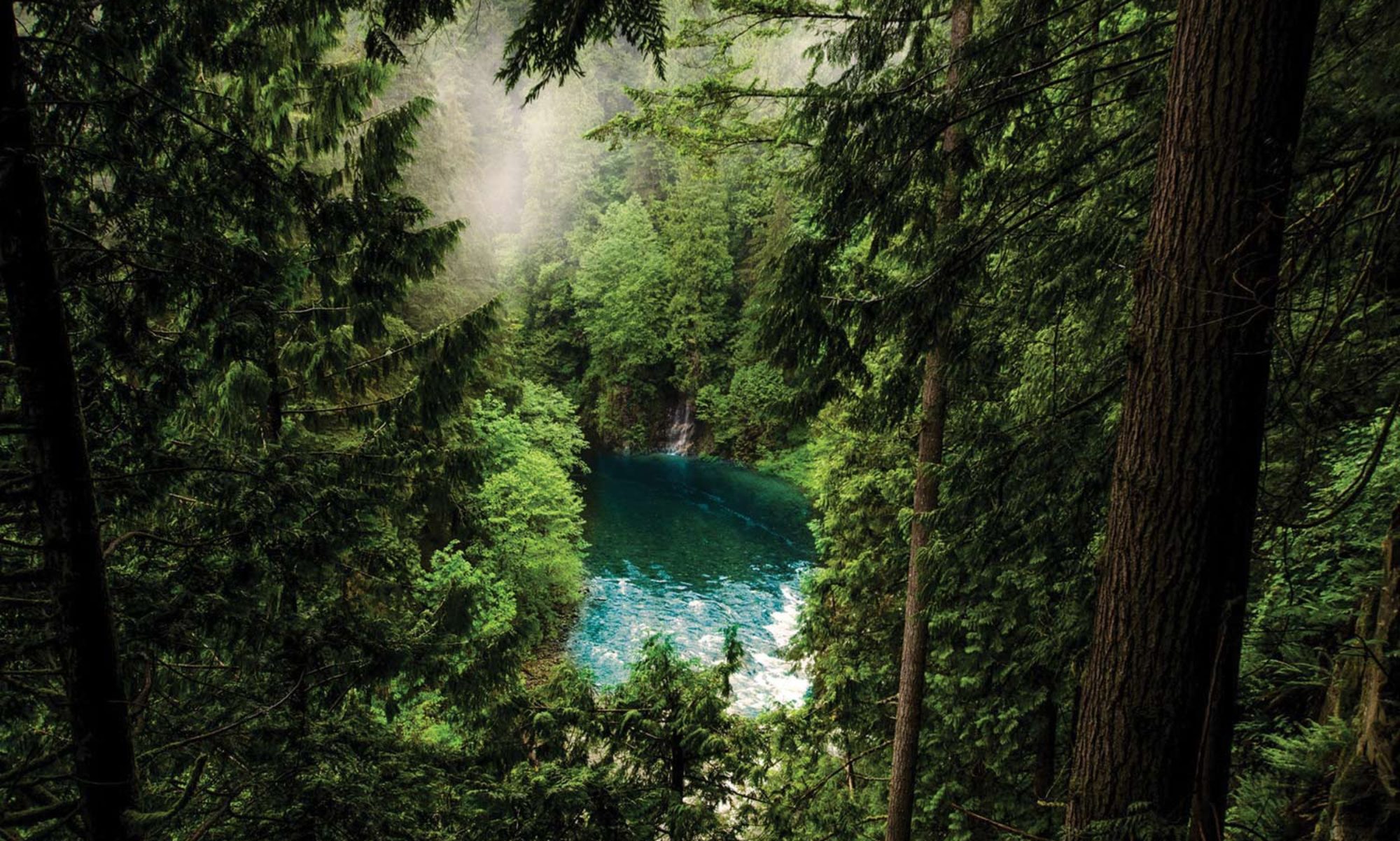


La fondation du Feu Nouveau Ancestral Unificateur dans les Alpes Suisses
Chaque aspect du Nouvel Événement Ancestral Unificateur du Feu en Suisse a été consciemment structuré pour raviver et éveiller une ancienne cérémonie du feu. Il s'agissait d'unir la sagesse ancestrale des pratiques du feu, répandue à travers le monde. Cet événement a été conçu selon les enseignements anciens des gardiens de la sagesse de la cérémonie du feu sacré, qui nous ont accompagnés et guidés dans ce cheminement. Leurs enseignements, enrichis par un vaste corpus de recherches sur la pratique, sont bien plus qu'un simple ‘ rituel du feu ’ ; ils constituent une véritable… manière d'être, un mode de vie, un cadre pour comprendre notre relation à la transformation, au sacrifice et au feu divin qui brûle en nous et autour de nous.
Vous trouverez ci-dessous une explication détaillée pour vous aider à comprendre comment le Feu Ancestral Unificateur Nouveau en Suisse a été structuré et pourquoi nous avons fait certains choix pour son déploiement équilibré et harmonieux.
Nous sommes reconnaissants d'avoir participé, à travers cette cérémonie, à la manifestation du Mandala de Feu Universel.
Intention
L'étincelle de toute cérémonie réside dans l'intention. Il s'agit de la description claire et précise de l'expérience recherchée : où, comment, quand et pour qui la cérémonie est censée avoir lieu. Établir une intention cérémonielle claire et consciente est la condition essentielle à un déroulement harmonieux et équilibré de la cérémonie. Elle pose les fondements sur lesquels repose tout le travail cérémoniel, servant de cadre à son déploiement. Elle guide les praticiens, les esprits et les énergies dans la tâche pour laquelle ils sont appelés.
Sur le plan personnel, les intentions sont des orientations conscientes et délibérées qui guident nos actions et concentrent notre énergie. Dans le cadre des cérémonies ancestrales, formuler des intentions implique d'identifier des objectifs ou des désirs précis que l'on souhaite explorer ou réaliser durant l'expérience. Les intentions agissent comme une boussole, orientant les intuitions et le pouvoir transformateur de la cérémonie. En formulant des intentions claires et sincères, nous créons un cadre pour notre cheminement, qui peut nous aider à focaliser notre esprit, à mobiliser nos émotions et à ouvrir notre âme aux enseignements et au potentiel de guérison du déroulement de la cérémonie.
Que ce soit pour une orientation cérémonielle ou personnelle, on ne saurait trop insister sur l'importance de prendre le temps de définir des intentions conscientes et clairement orientées.
L'objectif initial du Nouvel Ordre Ancestral Unificateur du Feu en Suisse était d'étudier les formes de cérémonies du feu en Europe et dans le monde ; de se souvenir des racines ancestrales européennes de la manière dont le feu sacré a été intégré à la pratique spirituelle et à la vie en général, et comment il nous a accompagnés et aidés à nous connecter à l'esprit, à nous-mêmes et à toute la création.
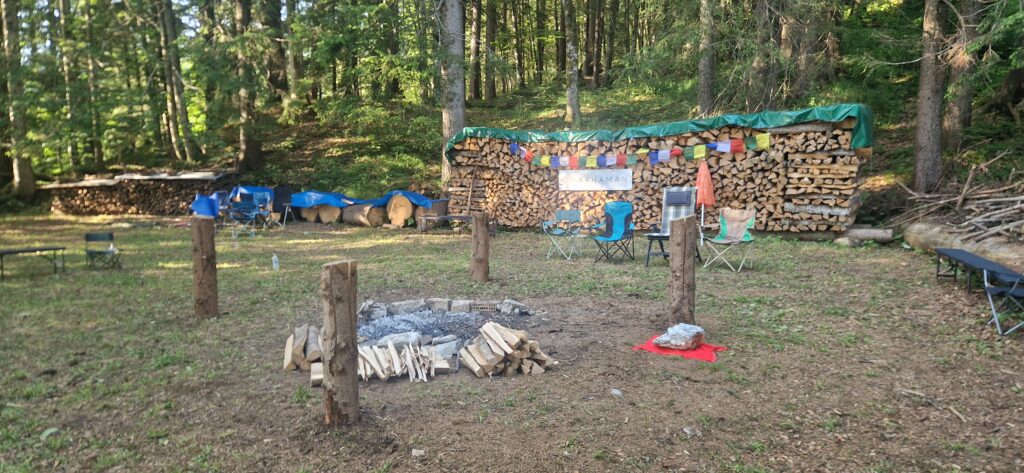
Pourquoi nous avons choisi de pratiquer une cérémonie du feu : La sagesse du feu a révélé des vérités à travers les civilisations
Dès les premiers instants où des mains humaines ont capturé l'étincelle du feu, nos ancêtres ne l'ont pas seulement perçue comme une source de chaleur ou de lumière ; ils l'ont vue comme un miroir vivant, une surface réfléchissante reliant le monde visible à l'invisible, le temporel à l'éternel. Dans la danse vacillante des flammes, ils ont découvert bien plus qu'un phénomène physique : une porte vers la sagesse divine, un outil de connaissance de soi et le reflet de l'ordre cosmique lui-même. À travers le monde antique, des rives de l'Indus aux temples de Thèbes, des forêts brumeuses d'Europe aux places cérémonielles de Mésoamérique, le feu était vénéré comme un miroir révélant des vérités cachées, purifiant l'âme et établissant un lien entre l'humain et le divin.
Cette conception du feu comme miroir n'était pas qu'une simple image poétique ; c'était une technique spirituelle concrète, une méthode d'introspection et de révélation qui a façonné les rituels, les cosmologies et les pratiques individuelles pendant des millénaires. Les flammes ne se contentaient pas de brûler ; elles parlaient, reflétaient et transformaient. Elles reflétaient l'état de l'âme, révélaient les desseins du destin et illuminaient le chemin de l'éveil. Contempler le feu, c'était se regarder dans un miroir qui ne se contentait pas de refléter son visage, mais qui révélait les profondeurs de l'être.
Le feu comme miroir du divin :
Quand le divin parle à travers les flammes
Pour d'innombrables civilisations, le feu n'était pas seulement un outil, c'était un messager entre les royaumes, Les flammes étaient une manifestation physique du divin, reflet de la volonté de l'esprit, de l'ordre du cosmos et des mécanismes cachés de la création. Elles n'étaient pas aléatoires : porteuses de sens, elles permettaient à ceux qui savaient les interpréter d'entendre les voix des divinités, des ancêtres et des forces cosmiques.
Le Feu de la Sagesse est notre Sage Aîné et Maître
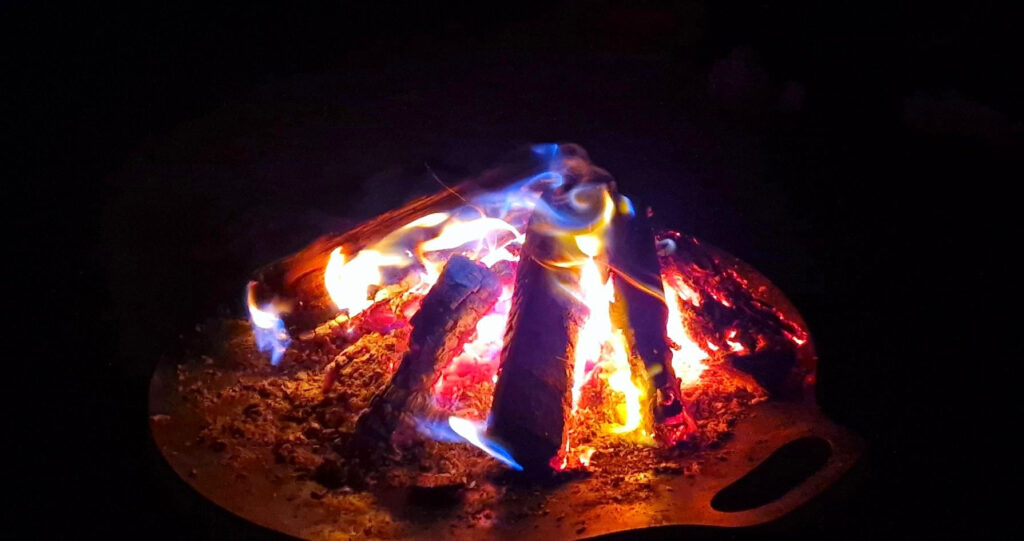
Certaines personnes participent à une cérémonie du feu et en ressortent transformées. Leur façon de parler, de marcher, leur sentiment d'être spéciales, comme si la proximité du feu les avait placées au-dessus des autres. Mais le feu ne crée pas de personnalités. Il révèle. Et tôt ou tard, il révèle aussi ceux qui empruntent ce chemin pour se contempler et ceux qui s'en servent pour se transformer.
S'asseoir près des braises ne rend personne humble, profond ou sage. Cela se manifeste plus tard, dans vos paroles, dans vos relations avec autrui, et dans le respect de vos engagements pendant et après la cérémonie.
Pour les Lakotas, le feu est Wanáǧi Tȟáŋka, Le souffle du Grand Esprit, une force vitale qui ne se soumet pas à l'ego humain. La fumée du calumet sacré porte les prières vers les cieux, mais le feu lui-même exige de l'honnêteté : aucune cérémonie ne peut dissimuler un cœur réfractaire au changement.
Les Mayas parlent de Holocauste, Le feu sacré purifie le monde, consumant la corruption et le mensonge. Mais ce feu ne demande ni votre nom, ni votre lignée, seulement votre volonté de vous défaire de ce qui ne sert plus le peuple ni la terre.
Dans les traditions des Premières Nations, le feu n’est pas un spectacle. C’est un miroir. Il révèle le poids que vous portez — le chagrin, la colère, les comportements égocentriques malsains, les histoires auxquelles vous vous accrochez — et vous interroge :, “ Les laisserez-vous ici, ou les ramènerez-vous dans le monde ? ”
Le feu ne juge pas. Il ne fait que révéler la vérité.
Et ce qui reste après que les flammes ont fait leur œuvre, c'est la vérité de qui vous êtes sans les masques que vous portez.
Le Feu Sacré est la Lumière de la Sagesse
Dans le canon bouddhiste, le feu (TejasLe feu est l'un des grands éléments, symbole de transformation et de purification. On dit que le Bouddha lui-même est né d'un feu sacré, signe que l'éveil ne se donne pas, mais se révèle par le lâcher-prise. Le maître zen Dōgen a écrit :
“ Étudier soi-même, c’est s’oublier soi-même. S’oublier soi-même, c’est être illuminé par toutes choses. ”
Le feu de la méditation n'est pas la flamme que vous voyez, mais la combustion de l'illusion — les histoires de “ Je ”, “ moi ”,” et la “"le mien."” Une cérémonie, une retraite, mille prosternations : autant de doigts pointés vers la lune. La lune, c’est votre propre esprit, et le feu, c’est la chaleur de la conscience qui fait fondre la glace de l’ignorance.
Les bouddhistes tibétains parlent de chö, la pratique consistant à couper les attachements. Dans l'offrande par le feu (Jinsek), les pratiquants brûlent des représentations de leur souffrance, non pas pour nourrir leur fierté d“” avoir surmonté », mais pour se le rappeler : “ Cela aussi doit passer. À quoi est-ce que je m’accroche encore ? ”
Le feu se moque de votre titre. Il demande seulement : “ À quoi allez-vous renoncer aujourd’hui ? ”
Le feu ne ment pas. Il ne fait que révéler la réalité. Et ce qui demeure après le passage des flammes, c'est la vérité. Certains utilisent le feu pour nourrir leur image. D'autres le laissent consumer ce qu'ils n'ont plus besoin d'être. La véritable libération exige de se défaire de tout ce qui nous empêche de voir la véritable nature de toute chose.
La préparation de la cérémonie du feu sacré
Les druides de l'Europe celtique comprenaient qu'avant d'entrer dans les bois sacrés (némétonsLà où brûlaient les feux, il leur fallait passer des jours en silence, à jeûner et à méditer. On n'approchait pas le feu à la légère ; on le méritait. Le voyage préparatoire et les cérémonies qui l'entouraient servaient de catalyseur pour la purification intérieure et l'émergence de la vision qui concrétisait l'intention cérémonielle. Dans cette perspective, les pratiquants s'asseyaient en silence devant les flammes, laissant le feu consumer les distractions et révéler la véritable nature de leur cœur ainsi que la voie à suivre, puisée dans leur sagesse intérieure.
Au cours des dernières années, et plus particulièrement en 2025, nous avons entrepris de nombreux voyages à travers l'Europe afin d'approfondir notre compréhension des traditions ancestrales et des pratiques spirituelles qui y sont répandues. Lors de ces voyages, nous avons échangé avec les aînés sur notre intention de raviver une pratique du feu sacré et leur avons demandé de confirmer les informations issues de nos recherches et des transmissions orales des aînés du monde entier.
Pour ce faire, nous avons organisé plusieurs pèlerinages stratégiques dans des lieux clés afin d'acquérir de précieuses connaissances sur les traditions anciennes de ces régions.
Le feu ne réagit ni à la précipitation ni à la négligence. Il réagit à la présence, à la préparation et à la pureté. Communier avec le feu sacré, c'est se présenter pleinement, s'offrir tout entier – non seulement l'esprit, mais aussi le cœur, le corps et l'âme.
Pour en savoir plus sur les détails de tous les pèlerinages et des étapes de préparation que nous avons entrepris au fil des ans.
Pourquoi avons-nous allumé le feu ancestral unificateur lors du solstice d'été ?
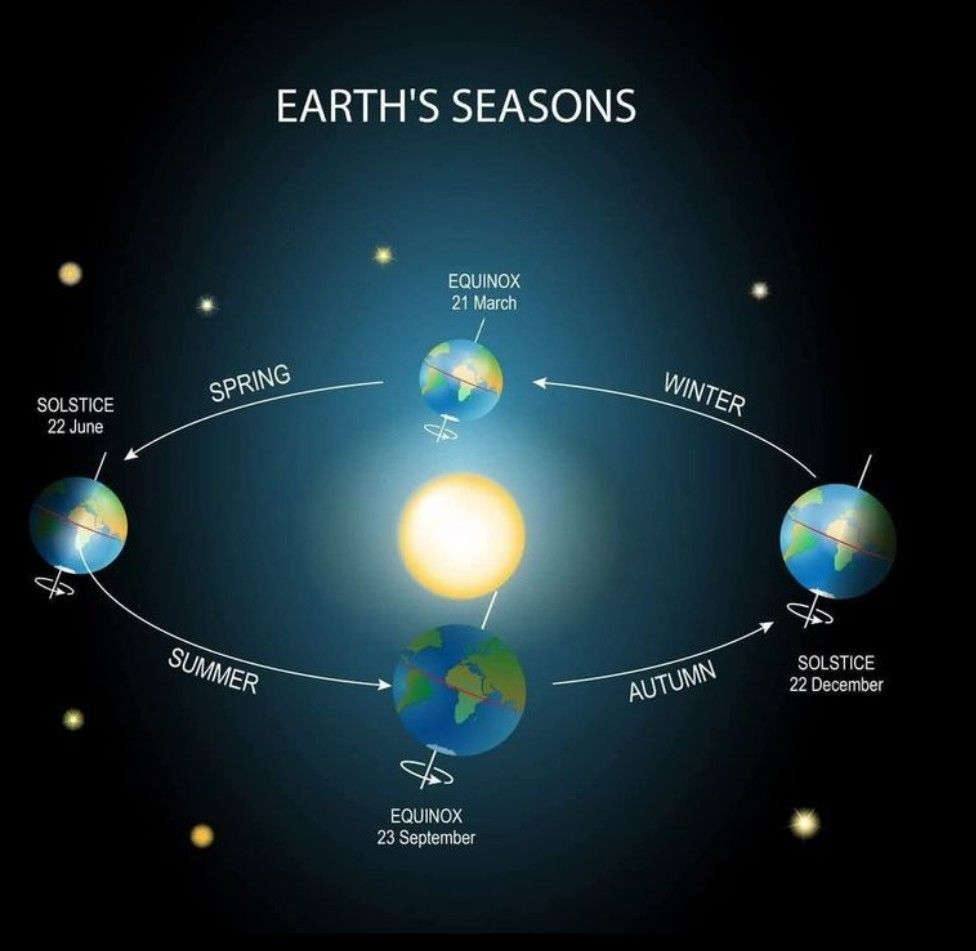
Le cycle du Soleil représente le cycle de notre vie et reflète le flux naturel de l'énergie qui va et vient vers l'intérieur. Il y a des temps pour grandir, des temps pour faire une pause, des temps pour se délester et des temps pour apprendre.
De même que nous nous alignons sur le voyage de la Lune chaque mois, nous nous alignons également sur le voyage du Soleil tout au long de l'année.
Les druides, les anciens Égyptiens, les anciens Grecs, les anciens Romains, les Européens autochtones, les civilisations d'Europe du Nord, les Mayas, les Olmèques, les Chinois, les Indiens Chumash de Californie, les Aborigènes australiens et bien d'autres ont aligné leurs monuments anciens et leurs sites sacrés sur les solstices et les équinoxes et ont célébré des cérémonies ces jours-là.
Par exemple : aux Grandes Pyramides d’Égypte, au solstice d’été, le soleil illumine la tête du Sphinx. Lorsque les premiers rayons du soleil percent l’obscurité, le jour du solstice d’été, ils frappent le monument de Stonehenge en son centre, éclairant chaque pilier. Sur l’île de Pâques, quinze des statues de pierre géantes, appelées Moaï, sont orientées vers le coucher du soleil au solstice d’été. Un tumulus en forme de serpent géant dans l’Ohio, aux États-Unis, est également orienté vers le coucher du soleil au solstice d’été. Deux des trente grottes d’Ajanta, en Inde, captent la lumière du soleil aux solstices. Lorsque cela se produit, les statues sacrées de Bouddha qu’elles abritent s’illuminent.
Les symboles utilisés sur ces sites antiques représentent des processus spirituels liés à des événements cosmiques, témoignant d'anciennes pratiques de célébrations cérémonielles aux solstices et aux équinoxes. De plus, le savoir inscrit dans ces sites nous révèle que ce qui se passe au-dessus de nous est lié à notre monde terrestre, et surtout, à nous-mêmes. Ils illustrent un lien entre l'humain et le divin, le personnel et le cosmique, le monde intérieur et le monde extérieur.
Le solstice d'été symbolise ainsi notre voyage continu des ténèbres à la lumière. Il nous rappelle que l'espoir existe, que la lumière intérieure peut rayonner aux quatre coins du monde et inspirer autrui. C'est un appel à travailler sur nos dynamiques internes limitées et à cultiver cette lumière en nous.
Ainsi, un feu allumé lors du solstice d'été nous invite à nous tourner vers l'intérieur, à célébrer la lumière de la sagesse en nous et chez les autres, et à réfléchir au potentiel d'éveil de notre conscience.
Le solstice d'été symbolisant l'illumination et l'éveil, allumer un feu ce jour-là est une invitation à honorer la plénitude de l'Être et la source spirituelle dont la conscience a émergé.
Pourquoi avons-nous allumé le feu dans les Alpes suisses ?
Les montagnes occupent une place profonde et constante dans l'histoire de l'humanité. À travers les cultures, elles transcendent leur simple fonction de paysage pour devenir des symboles sacrés reliant le terrestre au divin. Perçues comme imposantes et impressionnantes, les cimes font souvent office de centres cosmiques ou d'axes du monde, unissant ciel, terre et enfer. Cette verticalité et cet isolement confèrent aux montagnes une dimension quasi mystique, en faisant des lieux privilégiés pour la rencontre avec des forces surnaturelles, des êtres divins et des expériences transformatrices.
Dans les mythologies et les traditions spirituelles, les montagnes apparaissent sous de nombreux rôles interdépendants : demeures des dieux et des esprits, temples naturels et lieux de pèlerinage, sources d'eau vitale et de fertilité, lieux de sépulture ou origines des esprits ancestraux.
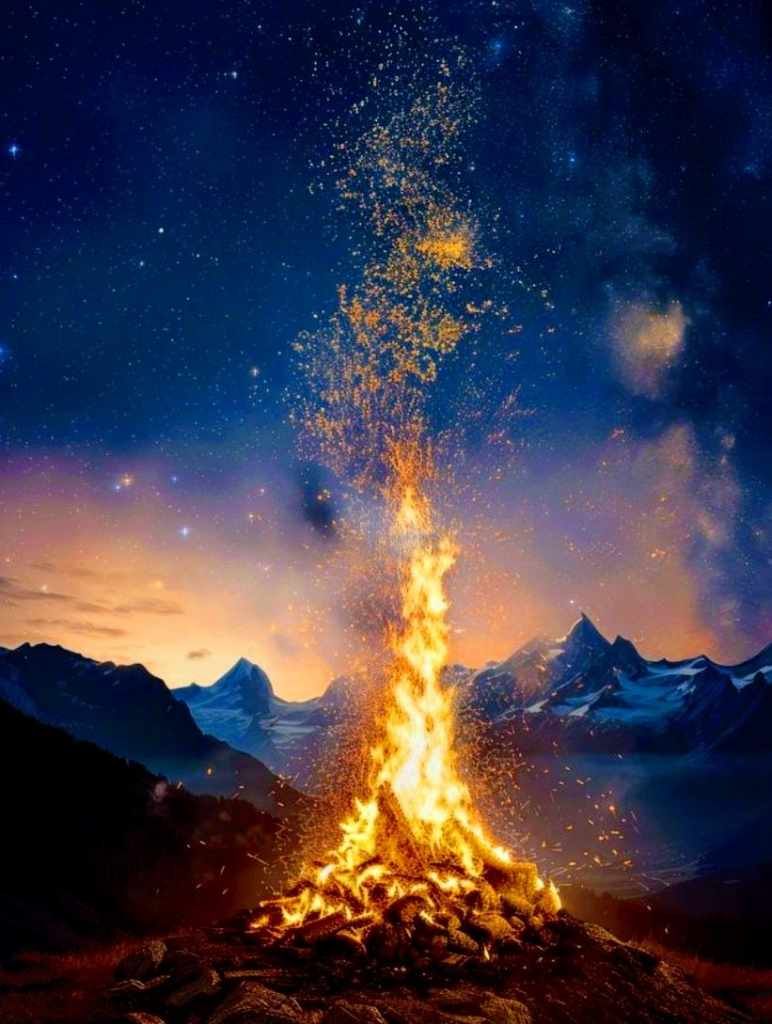
Elles confèrent aux communautés un sentiment d'identité et d'unité, ancrent les frontières sociales et font office de gardiennes protectrices. Chamans, prêtres et chercheurs spirituels puisent fréquemment force, savoir et inspiration dans les montagnes, les considérant comme des lieux de révélation, d'initiation et de renouveau spirituel.
À travers les âges, des récits relatent des voyages vers des sommets particuliers, des rituels qui “ habillent ” ou ancrent les montagnes, et la dénomination des sommets d'après des divinités ou des caractéristiques cosmologiques qui recréent sans cesse la signification culturelle d'une montagne.
Ces récits aident les communautés à expliquer les phénomènes naturels, à définir l'ordre territorial et social et à transmettre la mémoire collective. Ainsi, les montagnes deviennent des réceptacles vivants de sens – des lieux qui offrent un sentiment d'appartenance, des repères et des réponses aux défis de la vie.
En définitive, les montagnes sont à la fois des paysages physiques et symboliques : elles façonnent des réalités pratiques (sources d'eau, frontières, ressources) tout en abritant de riches univers spirituels.
L'allumage du Feu Ancestral Unificateur dans les Alpes suisses est une pratique qui souligne le besoin constant de l'humanité d'ancrer son existence dans une cosmologie plus vaste, faisant de la montagne cérémonielle un point d'ancrage pour nos croyances communes, notre identité et notre quête de transcendance.
Pourquoi avons-nous utilisé des cendres anciennes du monde entier pour allumer le feu ?
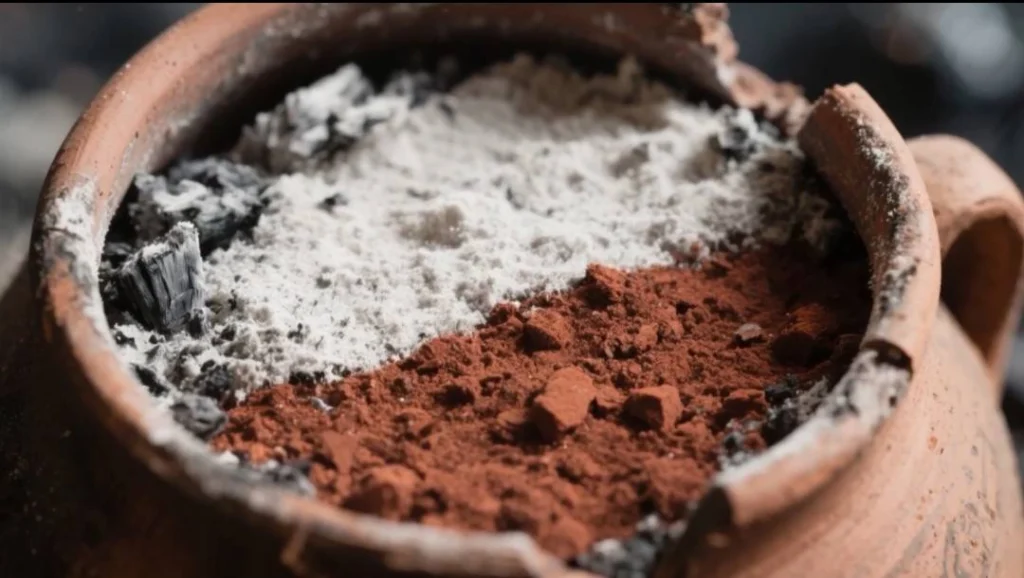
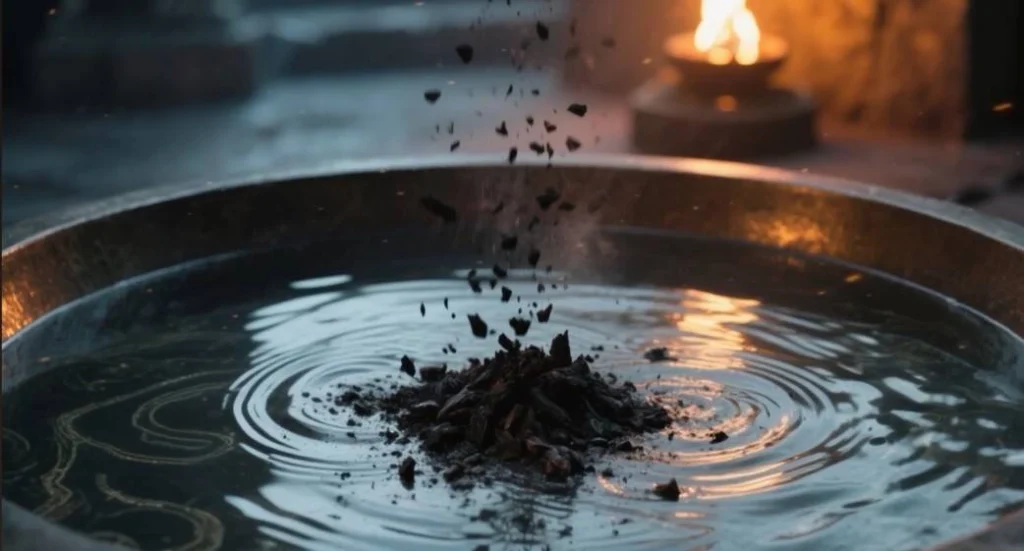
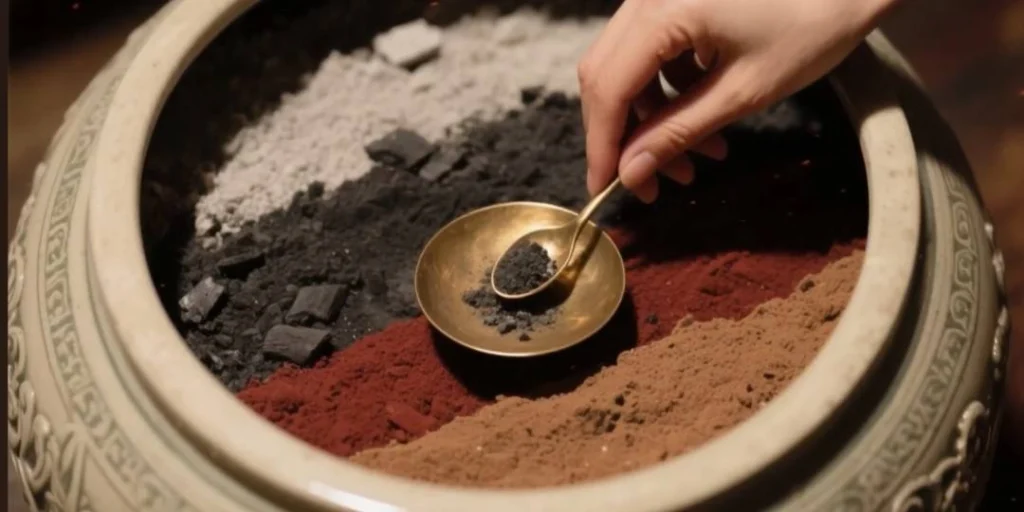
Alors que nous nous apprêtons à allumer le Feu Ancestral Unificateur en Europe avec des cendres cérémonielles ancestrales venues du monde entier, accueillons les cérémonies sacrées inscrites dans ces cendres ; saluons les gardiens de ces récits et la sagesse qu'ils transmettent. Prenons un instant pour réfléchir : notre petite flamme, allumée ce soir, est l'écho de la flamme éternelle de l'humanité, portée par les cendres sur lesquelles elle s'allume ; une minuscule cousine qui renferme en son cœur incandescent sa propre mémoire.
Travailler avec d'anciennes cendres sacrées, issues de différentes traditions du monde entier, pour allumer le Feu Ancestral Nouveau Unificateur est un acte de souvenir ; un rassemblement des mémoires ancestrales de l'humanité ; une tentative d'établir une continuité de l'ancienne voie pour communier avec le divin, grandir et s'unir dans notre humanité partagée de compassion, de sagesse et d'amour, qui est contenue dans les souvenirs et l'essence de ces cendres et qui sera transmise à travers les cendres unifiées de notre feu.
– Crizalia
Pourquoi trois offrandes de fumée ont été fabriquées
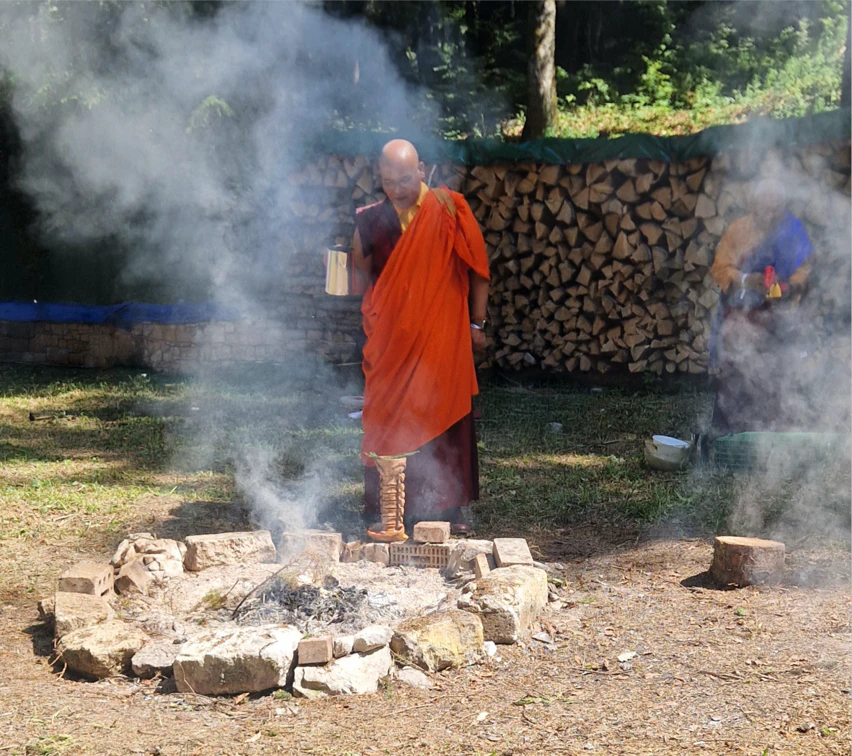
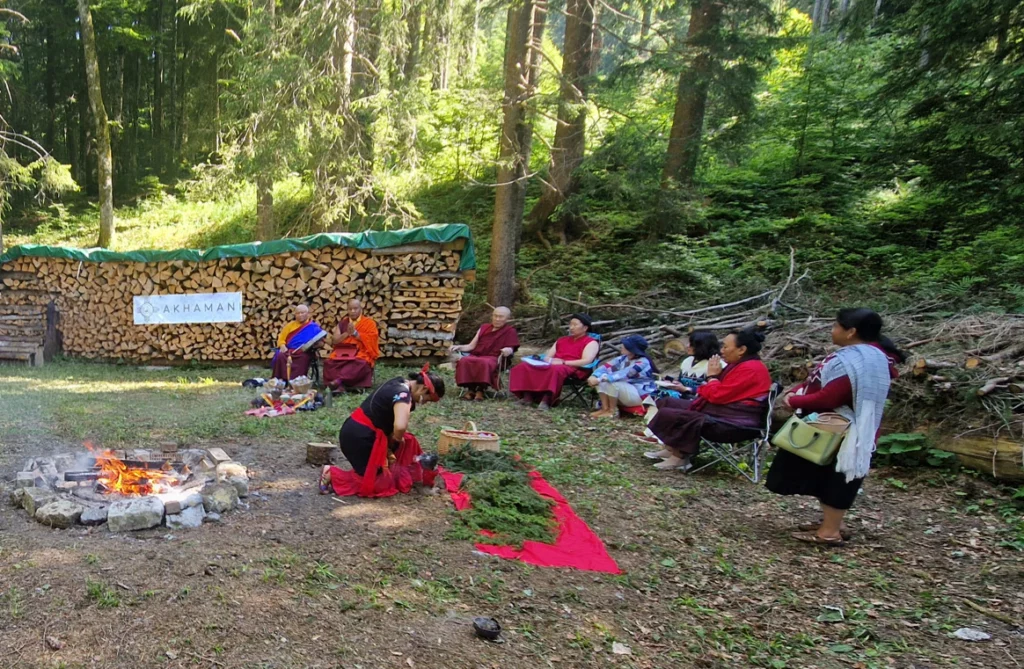
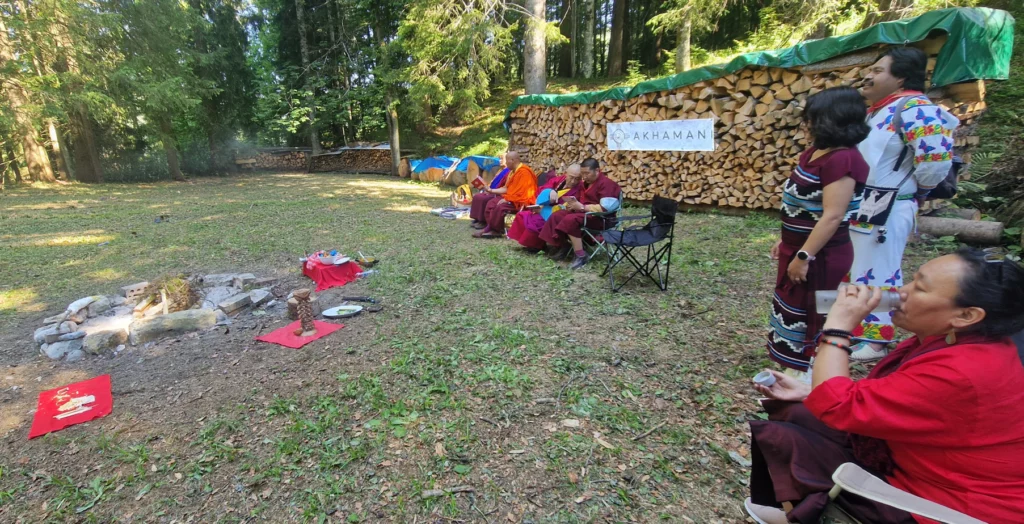
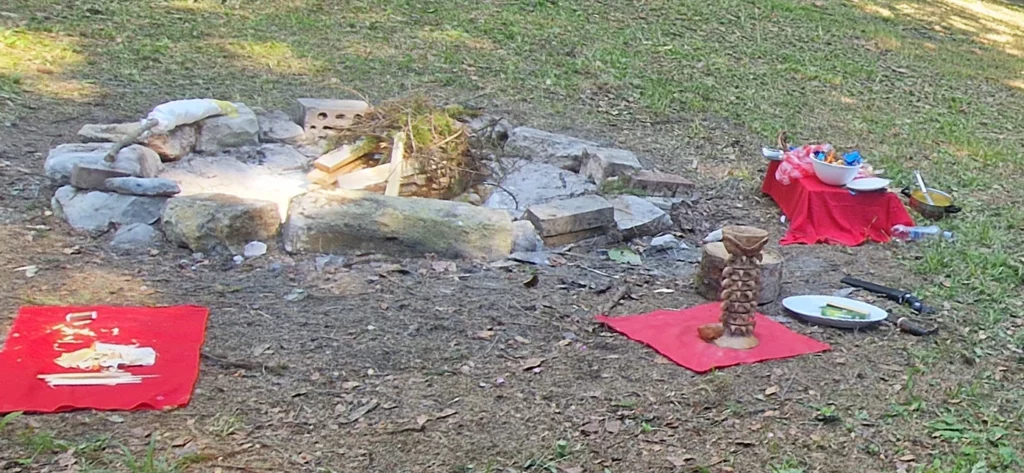
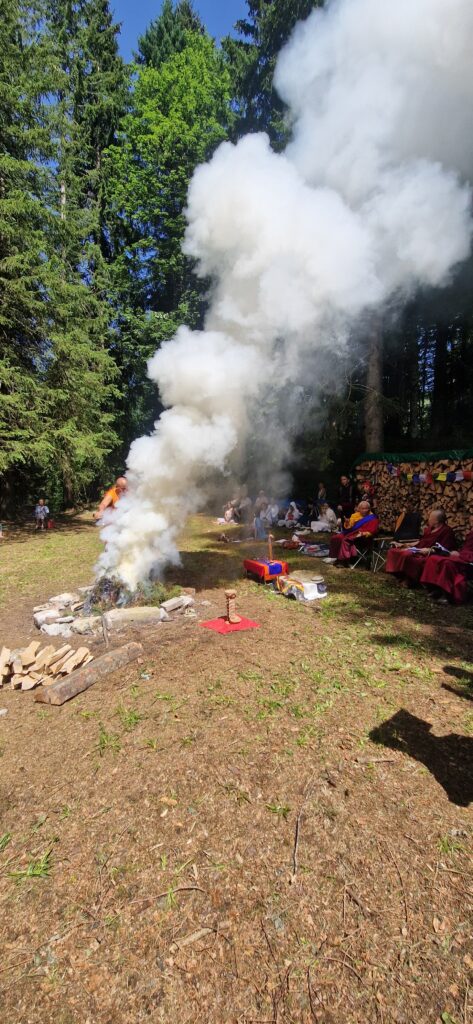
Les traditions ancestrales enseignent que la sagesse ne se déverse pas simplement sur ceux qui s'assoient devant un feu sacré. Il existe plutôt un protocole sacré de préparation : une période dédiée à la purification et à l'harmonisation intérieure qui unit le pratiquant au but de la cérémonie.
Dans la plupart des traditions ancestrales, cette préparation se déroule sur plusieurs jours de prière, de jeûne, de purification et de recueillement avant l'allumage du feu sacré. Ces rites préliminaires comprennent souvent de petites cérémonies ou des offrandes faites en amont de l'événement principal. Ce n'est que lorsque les esprits ont accepté et béni ces actes préliminaires que la cérémonie principale commence – un déploiement sacré accordé par la permission divine.
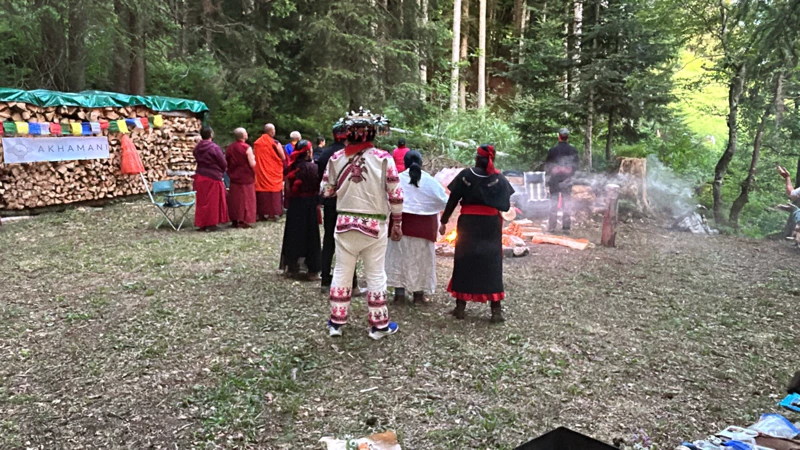
C’est pourquoi, lors de l’Allumage du Feu Ancestral Unificateur en Suisse, les Vénérables Khenpo Tsultrim Tenzin Rinpoché, Khenzur Nyima Wangyal Rinpoché, Lovon Lama Shagdarsuren Bayanjargal et Amarzul Purevdorjor ont récité des mantras, pratiqué la prière, jeûné et médité à des moments précis de la journée. Ces pratiques préparaient les participants à trois cérémonies d’offrandes de fumée : purifier le terrain pour le bon déroulement de notre rassemblement, invoquer l’Esprit du Feu (divinité) et faire les offrandes appropriées pour une cérémonie propice, et maintenir la réciprocité entre tous les présents et les esprits gardiens locaux de toutes les lignées. Les offrandes de fumée ont eu lieu le matin et se sont poursuivies pendant trois jours, jusqu’à l’allumage du feu principal. Les gardiens de la sagesse mexicaine, Crizalia et Jonas, ont également accompli quotidiennement diverses offrandes et rituels aux esprits et ancêtres locaux.
Pourquoi avons-nous accompli des rituels de purification ?
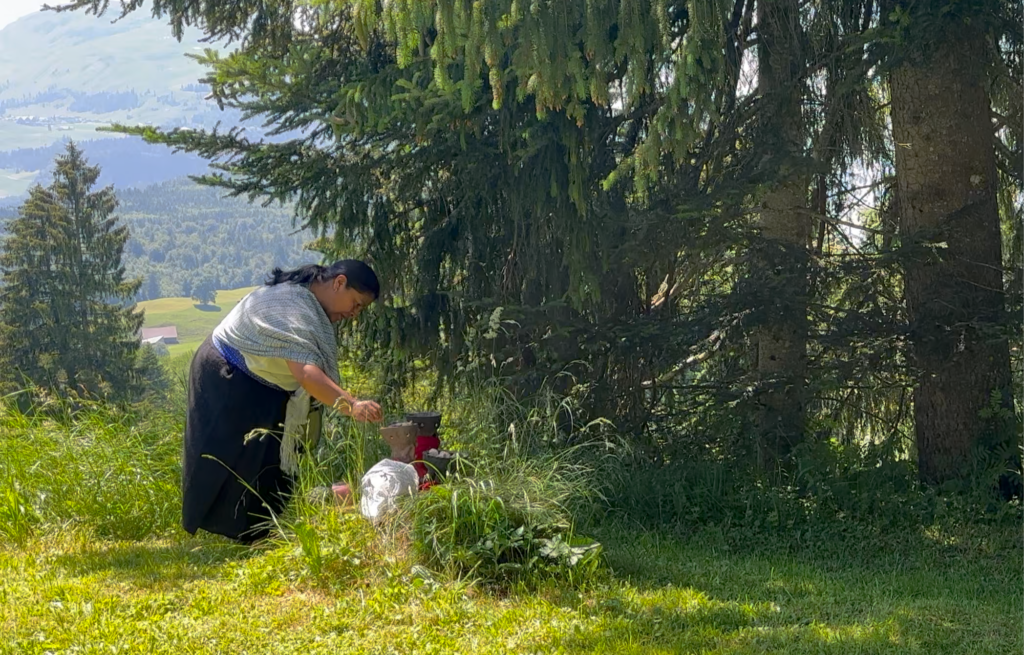
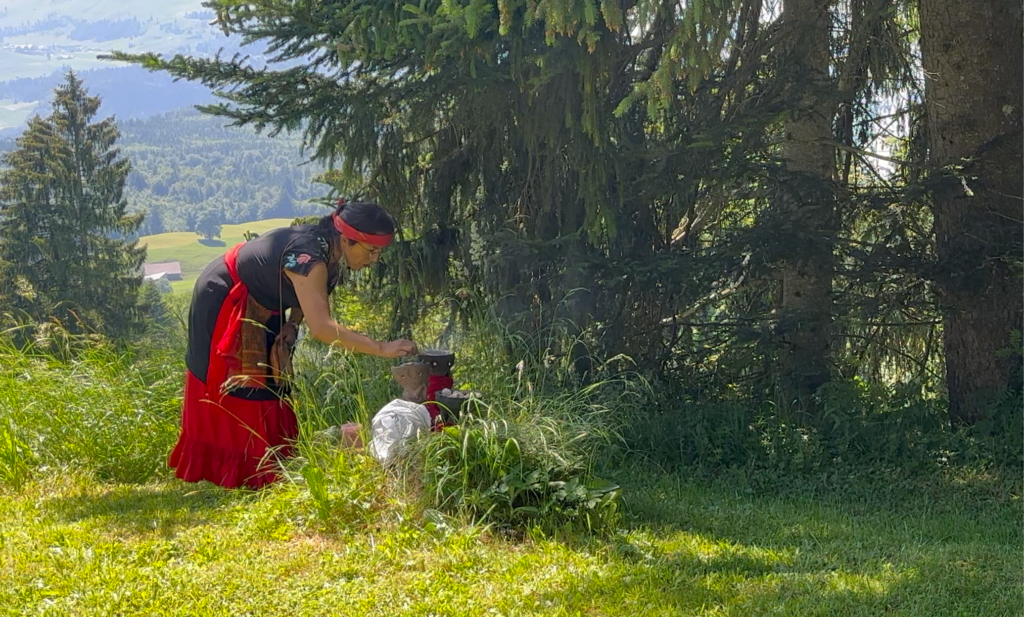
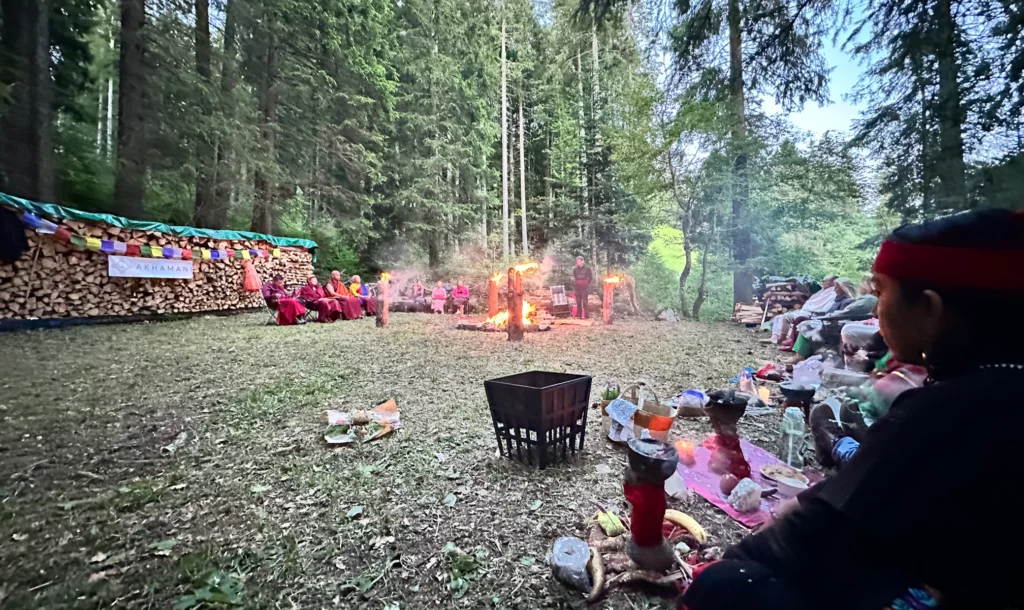
Des rituels de l'eau étaient pratiqués quotidiennement, à des heures précises, pour la purification et l'équilibre du feu et de l'eau par les Crizalia, gardiens de la lignée de l'eau d'Amérique centrale et du Sud, et nos aspirants à l'eau (Felix et Tamara). De même, les Sahumadoras, femmes du feu du Mexique, purifiaient rigoureusement nos espaces cérémoniels et toutes les personnes présentes tout au long de notre rassemblement et pendant tous les rituels et cérémonies. Cela garantissait la pureté et l'harmonie de notre temps passé ensemble. De plus, les chamans mongols et sibériens brûlaient parfois de la bouse fermentée pour générer une fumée purificatrice durant notre rassemblement.
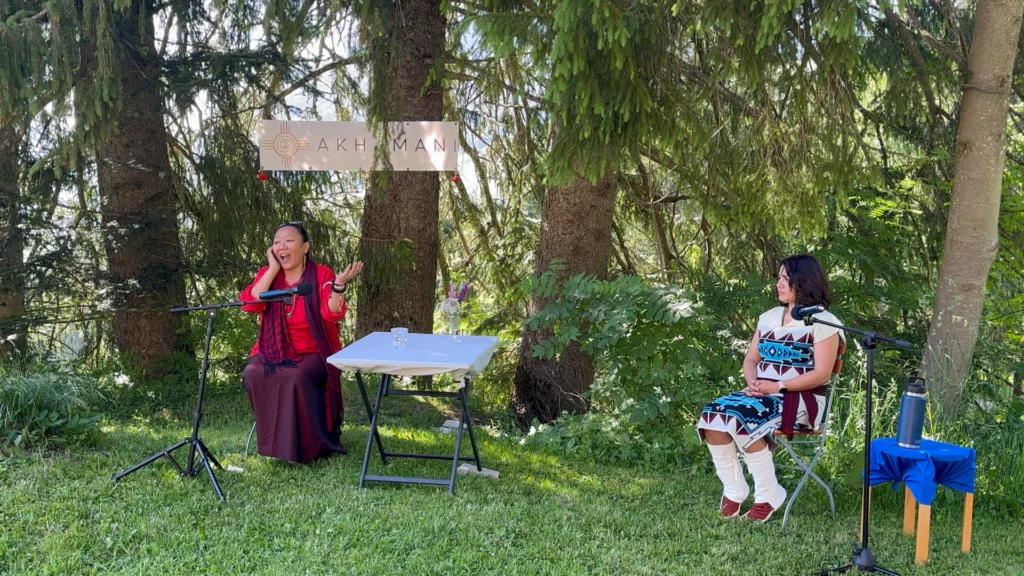
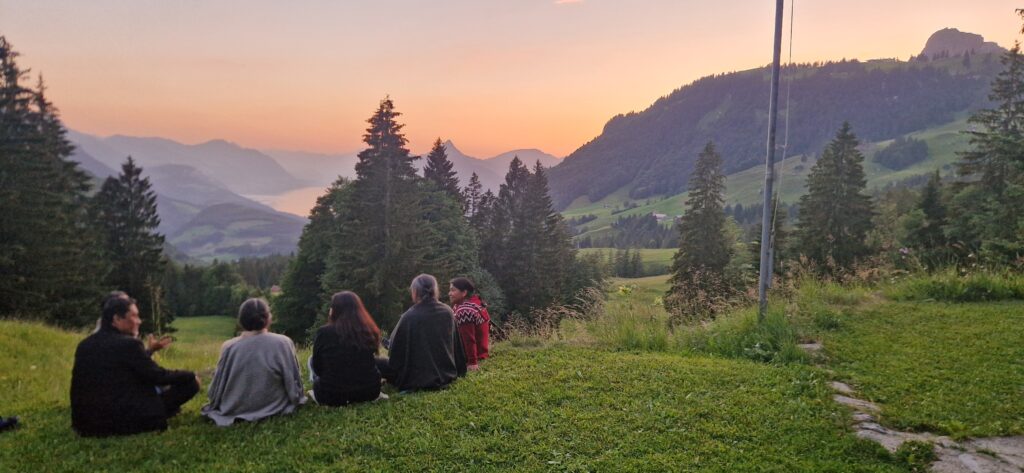
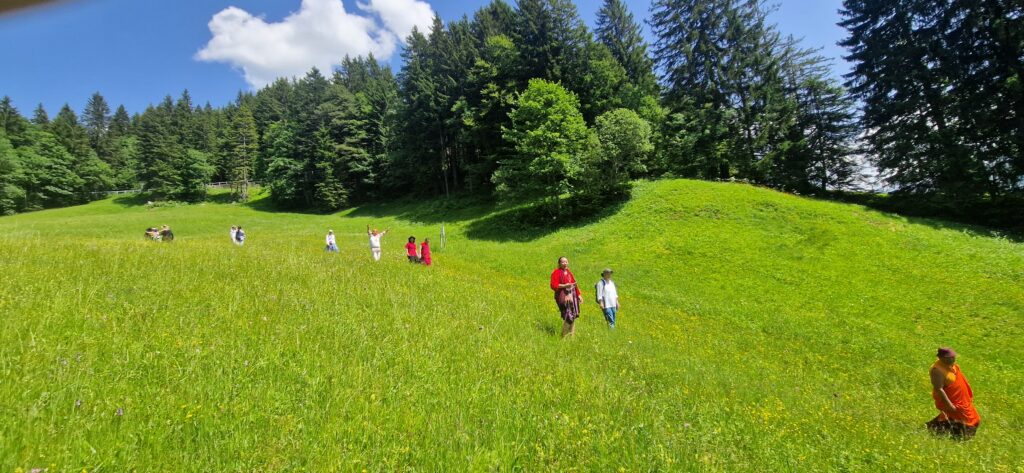
Pour apaiser l'esprit et l'humeur des pratiquants, Gazom Lhamo, Maria Juana, Gabriela, Leobardo, Chimgee, Ilin et Amir ont interprété des chants et des cantiques occasionnels pendant les temps de repos.
Pourquoi nous avons fait appel aux énergies des sept directions : Apertura de Rumbos
Par cet acte, l'espace qui nous entoure n'est plus ordinaire ; il devient un mandala vivant où les énergies de l'existence même sont invitées. ‘ Ouvrir les directions ’ lors d'une cérémonie du feu sacré, c'est consacrer l'espace, inviter les forces de la création à être témoins et à participer à l'œuvre que nous allons accomplir.
Cela fait référence à l'ouverture de la porte et à la communion entre le monde physique et le monde spirituel.
Pourquoi avons-nous pratiqué la méditation silencieuse pendant la cérémonie du feu qui a duré toute la nuit ?
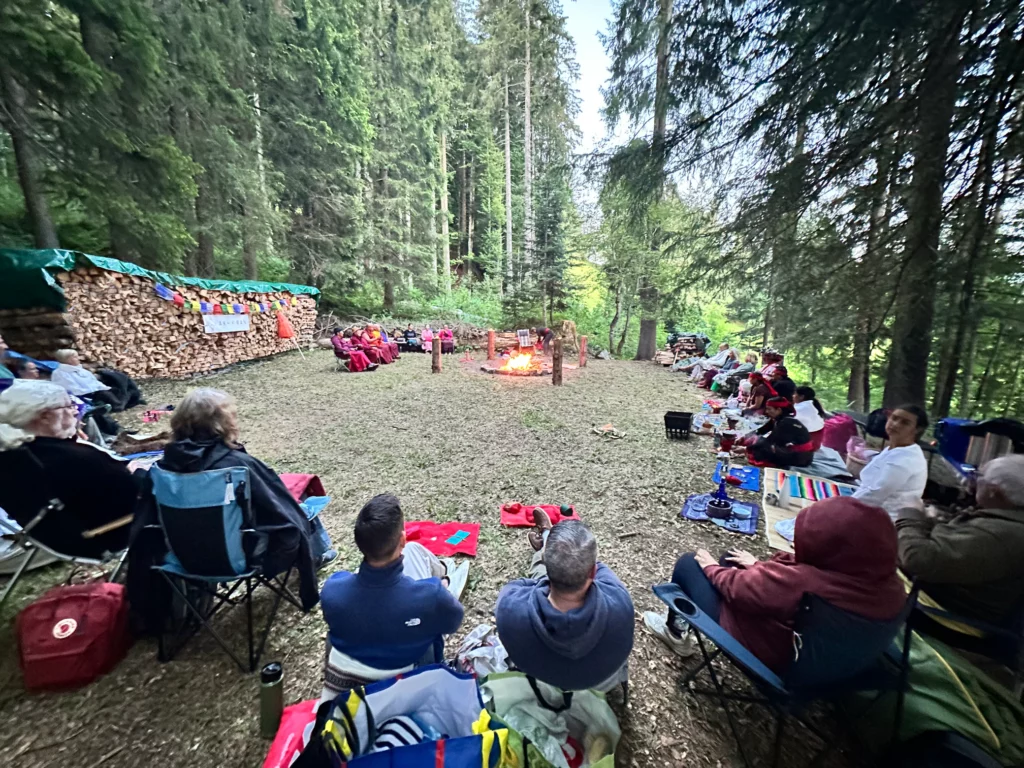
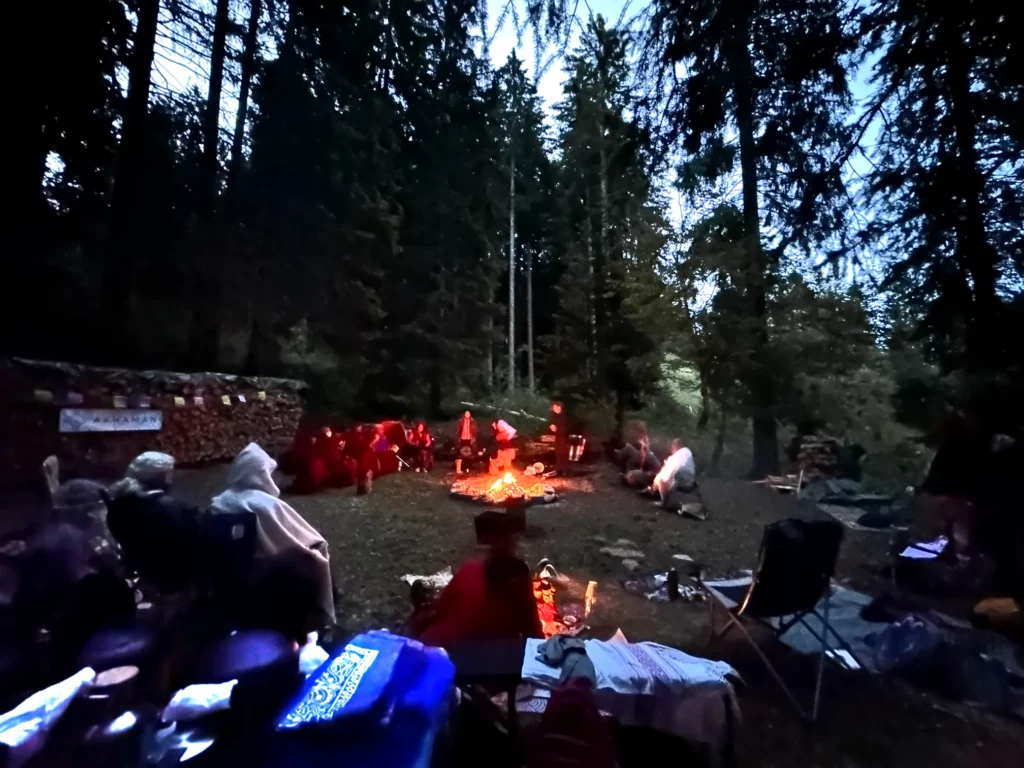
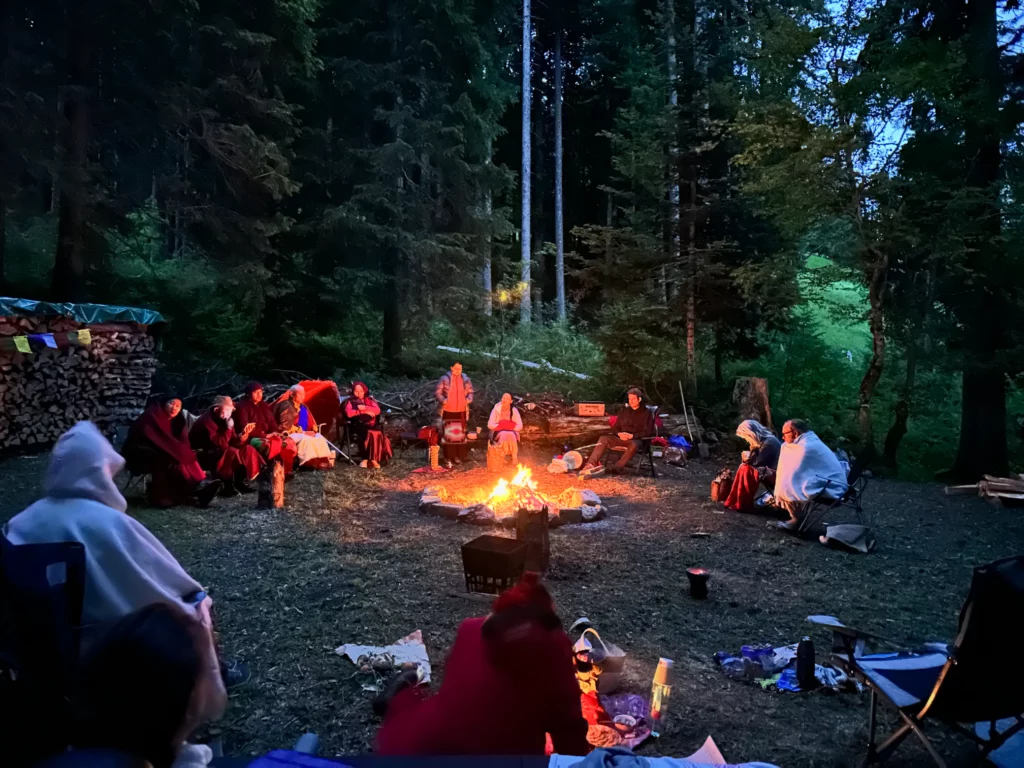
En termes simples, c'est parce que les civilisations anciennes méditaient en silence autour du feu sacré lors de cérémonies.
Bien que séparées par les océans et des siècles, les traditions spirituelles des cultures anciennes, centrées sur le feu, présentaient des structures remarquablement similaires. Au cœur de ces traditions se trouvait le cercle, forme symbolisant l'unité, l'éternité et le cosmos depuis l'aube de l'humanité. Les pratiquants, assis en cercle autour du feu, le visage illuminé par sa lueur, créaient une atmosphère où chaque visage semblait émerger d'un silence actif, porteur de la sagesse qui émanait de chacun.
Dans le monde antique, le feu était bien plus qu'une simple source de chaleur : il était une présence vivante, un pont sacré entre le terrestre et le divin, une force de purification et de révélation. Des bosquets brumeux de l'Europe celtique aux temples d'Égypte, des autels védiques de l'Inde aux foyers communautaires des tribus amérindiennes, l'humanité se rassemblait autour des flammes non seulement pour survivre à la nuit, mais aussi pour se connecter à quelque chose de plus grand qu'elle-même.
La pratique de la méditation en silence autour d'un feu sacré était un phénomène universel, un langage partagé de l'âme qui transcendait les frontières culturelles. Dans le crépitement feutré du bois et la danse régulière des braises, les peuples anciens trouvaient un miroir du cosmos, un purificateur de l'esprit et une porte d'accès à une sagesse au-delà de la perception ordinaire.
L'un des objectifs les plus profonds de la méditation par le feu était la connexion spirituelle et la communication divine. Le feu n'était pas simplement un élément à maîtriser ; c'était une entité vivante, un messager entre le monde humain et le Grand Mystère, les Déités, les Esprits et les Énergies. Dans la tradition védique de l'Inde ancienne, le feu sacré Agni Le feu était vénéré comme la “ bouche des dieux ”, le messager divin des prières et des offrandes. Lorsque les sages et les chercheurs méditaient en silence devant les flammes, ils ne se réchauffaient pas seulement ; ils s’accordaient à une conscience supérieure, ouvrant un canal par lequel la volonté des divinités pouvait être perçue. De même, dans les temples du feu de la Perse zoroastrienne, les flammes éternelles étaient entretenues dans un silence respectueux, car on croyait qu’elles reflétaient la lumière incréée d’Ahura Mazda, le dieu suprême de la sagesse. Les cultes du foyer grecs, eux aussi, considéraient le feu comme un intermédiaire sacré ; le foyer de la maison, entretenu par le feu… Vestales À Rome, c'était le centre spirituel de la ville, où brûlait la flamme de Vesta, déesse du foyer, comme un lien perpétuel avec le divin. Dans chacune de ces traditions, le silence n'était pas synonyme de vide, mais de présence, une manière de se dépouiller du bruit du monde et d'écouter les murmures du sacré.
La pratique méditative du feu favorise l'union de l'esprit et de l'âme.
La nature multisensorielle et transformatrice du feu en fait un vecteur privilégié de sagesse. Contrairement à un miroir statique ou à un livre, le feu est vivant : il bouge, il crépite et siffle, il réagit au vent, au bois, à l’eau, aux éléments en général. Ce dynamisme le rend particulièrement adapté à l’apprentissage actif et à l’exploration spirituelle.
Psychologiquement, le scintillement des flammes induisait un état de transe, un phénomène bien documenté par les neurosciences modernes. Les rythmes irréguliers de la lumière du feu sollicitaient le réseau du mode par défaut du cerveau, le même système actif lors de la méditation et de l'introspection profonde. Ceci rendait les pratiquants plus réceptifs aux enseignements, plus ouverts aux révélations et plus aptes à se souvenir de ce qui avait été partagé. La chaleur et la lumière créaient également un sentiment de sécurité et d'intimité, abolissant les barrières sociales et permettant même à des inconnus de s'exprimer d'égal à égal.
Spirituellement, le feu était un symbole de transformation. Il consumait sans détruire ; il réchauffait sans brûler ; il éclairait sans projeter d’ombres. C’est dans ce paradoxe que réside son pouvoir d’enseignement. Autour du feu, les anciennes coutumes pouvaient être consumées, laissant place à une compréhension nouvelle. Cela en faisait le cadre idéal des rites initiatiques, où les aspirants vivaient une mort et une renaissance symboliques, renaissant avec de nouveaux noms et de nouvelles responsabilités.
À travers les cultures et les millénaires, la méditation par le feu n'était pas un simple exercice spirituel ; c'était une pratique holistique qui unissait l'esprit, le corps et l'âme en une seule flamme lumineuse. Cette union n'était pas fortuite ; elle était cultivée par l'intention, le rituel et une profonde connexion à la présence vivante du feu. La sagesse issue de ces pratiques n'était pas une philosophie abstraite, mais une vérité incarnée : une compréhension vécue de l'existence qui transcendait les limites du moi.
Pourquoi nous pratiquons : pour nous souvenir et renouer avec la flamme intérieure.
L'enseignement le plus profond des traditions à travers le monde est que vous ne faites qu'un avec le feu. La même énergie qui brûle dans les flammes brûle en vous : le feu de la vie, de la transformation, de l'esprit, de la création. Les peuples anciens ne considéraient pas le feu comme un élément extérieur à vénérer, mais comme une manifestation du feu divin qui réside en eux.
La prochaine fois que vous vous assiérez devant une flamme, qu'il s'agisse d'une bougie sur votre autel ou d'un feu sacré sous les étoiles, souvenez-vous :
- Le feu est vivant
- Il te voit
- Elle répond à votre intention
- Il vous enseigne ce que vous devez apprendre
- Et vous aussi, vous êtes du feu
Les flammes parlent, êtes-vous prêts à les écouter ?
La cérémonie n'est pas le problème.
Il y a des gens qui passent des années à rechercher des cérémonies — de nouveaux chants, de nouveaux autels, de nouveaux maîtres — comme si le prochain rituel serait enfin celui qui les transformerait. La profondeur de la transformation ne dépend pas de la cérémonie. Elle dépend de ce que vous êtes prêt à laisser derrière vous.
Les anciens autochtones disent : “ Le feu ne fait pas de distinction entre chef et enfant. Il ne brûle que le mensonge. ”
Le Bouddha a enseigné : “ La paix vient de l’intérieur. Ne la cherchez pas à l’extérieur. ”
La lumière du feu de la sagesse peut vous révéler la vérité. Elle peut ouvrir une porte. Elle peut vous rappeler qui vous êtes. Mais elle ne peut pas, à votre place, vous libérer de ce à quoi vous vous accrochez encore. Elle ne peut pas vous défaire de vos excuses. Elle ne peut pas vous abandonner à vos peurs. Elle ne peut pas parcourir le chemin à votre place.
Et c’est peut-être pourquoi certaines personnes vivent une vie profondément transformée après une seule cérémonie, tandis que d’autres en subissent des centaines… et reviennent toujours au point de départ. Non pas que la cérémonie n’ait pas fonctionné, mais parce qu’elles ne sont pas encore prêtes à se détacher de ce qui a déjà suivi son cours.
Chaque transformation a un prix.
Et presque toujours, ce prix correspond à une ancienne version de nous-mêmes.
La différence n'est jamais une cérémonie.
Le feu sacré révèle les contradictions, expose nos illusions et prononce la vérité dérangeante. Il est le miroir qui dévoile les aspects troublants et les irritations de notre ego. Il reflète ce qui est déséquilibré et agit comme la flamme qui consume les certitudes limitantes que nous entretenons. C'est la lumière ancestrale et sage qui nous contraint à regarder en face ce que nous aurions préféré éviter ou ignorer.
Et lorsque cela arrive, la vérité nous rattrape, et les êtres humains réagissent de façon très étrange, révélant leur véritable nature sans masque. Nos actes témoignent de qui nous sommes vraiment, bien au-delà des mots que nous prononçons.
Le feu sacré révèle les problèmes engendrés par l'ignorance et l'incapacité d'interpréter ses révélations. Car lorsque nous personnifions une chose profonde, nous risquons d'en perdre de vue la fonction, le message et les révélations.
Lorsque cela se produit, les conflits internes des individus ressurgissent. Ils cherchent à attirer l'attention sur eux-mêmes, persuadés que leur point de vue est le plus important.
La cérémonie n'a jamais eu pour but de paraître différent ou d'imposer la différence aux autres.. Il s'agissait plutôt de voir, de révéler, de comprendre, d'intégrer et de transformer nos différences en apprenant les uns des autres et en collaborant. Il s'agissait d'élargir nos perspectives, de dépasser nos propres limites et nos lignées, et de fusionner avec la lumière du feu de la sagesse.
N'oubliez pas que le Mandala de Feu Universel est le reflet de notre véritable nature en action, au-delà des masques des mots. Il révèle ce qui reste à faire pour atteindre une véritable unité.
Leçons que nous sommes invités à intégrer pour cultiver une véritable unité
Au cours des nombreuses cérémonies auxquelles nous avons eu le privilège de participer, d'assister et dont nous avons tiré des enseignements lors de notre voyage vers le Mandala de Feu Universel, nous avons observé des leçons fondamentales communes, essentielles, sous une forme ou une autre, partout dans le monde, pour le bon déroulement de toute intention cérémonielle. Ces leçons sont : la révérence, l'humilité, la réciprocité, la transformation, le respect, l'unité et la gratitude.
Lors de la Cérémonie du Feu Ancestral Unificateur en Suisse, nous avons été témoins des comportements exemplaires des moines, des gardiens de la sagesse mexicaine et de toute l'équipe Akhamani, qui incarnaient ces aspects essentiels de l'humanité fondamentale et, à travers cela, le pouvoir transformateur de la cérémonie du feu sacré.
Si vous souhaitez en savoir plus sur les enseignements plus profonds de Les leçons tirées du mandala de feu universel – these are available to Akhamani members only. As a member, you can access la transmission orale à propos Les animaux totems qui ont participé au nouveau feu ancestral unificateur en Europe et le Transcriptions des enseignements Offert par les Gardiens de la Sagesse. Vous pouvez rejoindre notre association. ici et accéder au contenu cérémoniel étendu par se connecter Votre compte Akhamani.
Si vous souhaitez en savoir plus sur la collaboration qui s'est instaurée entre tous les Gardiens du Feu ayant participé à la cérémonie, vous pouvez consulter notre Expression de profonde gratitude.
Dons
Vous pouvez apporter une aide directe aux communautés ancestrales et aux populations vulnérables du monde entier en faisant un don. Tous les dons sont pris en compte des déductions fiscales pour les œuvres de bienfaisance dans tous les pays européens, aux États-Unis et dans d'autres parties du monde.
Quand vous soutenez Akhamani, vous contribuez à aider des populations, des cultures, des savoirs et des lieux qui tendent à disparaître, et vous créez un véritable lien qui transcende les frontières.
Veuillez indiquer le montant de votre don ci-dessous et laissez-nous une note pour nous informer du projet auquel votre don est destiné. Nous vous remercions de votre contribution et de votre soutien !

Pour savoir plus sur ce que nous faisons avec votre aide, visitez Événements et la Projets pages.