

Across the world, ancestral peoples and communities remain among the most vulnerable members of our societies. Many continue to face poverty, displacement, and discrimination. They also face the gradual loss of the lands, languages, and ways of life that have sustained them for generations.
Yet these communities carry an extraordinary heritage of human wisdom. They have preserved and transmitted it across centuries, often through times of persecution, suffering, and silence.
At Akhamani, our dedication to sustaining this ancestral wisdom is rooted in the relationships we cultivate with the communities themselves. Over the years, we have lived, learned, worked, and walked alongside our ambassadors, elders, and wisdom keepers. Through these shared experiences, we have come to understand that ancestral knowledge cannot be separated from the people who carry it. It is equally inseparable from the lands to which they belong and the daily lives through which it is expressed.
Our relationships are built with care, patience, reciprocity, and mutual respect. We share time, experiences, teachings, ceremonies, and the ordinary moments of community life. We listen to the challenges communities face, exchange knowledge and understanding, and work together to support their aspirations and needs.
Our commitment extends far beyond ceremonial gatherings. We seek to sustain their ways of life and their own ways of education. We support community efforts to pass ancestral wisdom to future generations and encourage the recovery of ancient ceremonies and practices. We also help preserve the sacred places, cultural expressions, and living traditions that give continuity to their heritage. This work includes supporting community initiatives, livelihoods, and basic necessities. It helps ensure that the people carrying these traditions have the means to continue their ways of life and transmit their knowledge.
We feel profound gratitude toward our ambassadors, elders, and wisdom keepers. Their dedication, generosity, and trust make these exchanges possible. Many have devoted their lives to protecting knowledge that might otherwise have been lost. Through their teachings and the example of their lives, we are reminded that ancestral wisdom is not simply something we receive. It is something we are called to honor through the way we live.
The ancestral knowledge of humanity did not arise as a product for the modern market of individual wellbeing. It emerged from a profound relationship with the land, the community, and the natural cycles. It was shaped by understandings of the body, illness, healing, birth, death, and the sacred dimensions of existence. Each people came to understand and express these dimensions in their own way.
These are living systems of knowledge, cultivated through observation, experience, ceremony, and the transmission of wisdom from one generation to the next.
To recover an ancestral practice does not mean dressing it in the language of modern spirituality or transforming it into a fashionable therapy. Not everything can be reduced to energy, manifestation, positive thinking, or simply going with the flow.
There is a profound difference between sustaining a tradition and using it as an aesthetic. Safeguarding ancestral knowledge is not the same as transforming it into a costume. Walking a ceremonial path with responsibility is different from speaking about sacred symbols without having lived their teachings or taken the time to understand their meaning.
Ancestrality is not a decoration, a fashion, or a means of cultivating a superficial spiritual identity. It is a way of life, a responsibility, and a living relationship with the wisdom of those who came before us.
The devastation of this ancestral heritage is not limited to Mexico or the original peoples of the Americas. It is part of the history of humanity, including Europe.
Over centuries, Europe also suffered profound losses of ancestral memory. Religious persecution, forced conversion, conflict, and the suppression of earlier spiritual traditions contributed to the destruction of sacred places, ceremonial objects, writings, and systems of knowledge. At different times and in different regions, those who carried ancient wisdom were persecuted, silenced, displaced, and killed. Countless teachings disappeared when the people who sustained them could no longer practice or transmit them openly.
Much of this devastation unfolded on European soil centuries before European powers carried conquest and colonization across the oceans. Entire ancestral spiritual traditions were suppressed. Their sacred places were transformed or destroyed, and the continuity of their ceremonies and teachings was broken. Over generations, many European peoples became separated from the spiritual heritage of their own ancestors.
Yet this wisdom was never entirely extinguished. Some ancestral traditions survived through families, communities, oral teachings, and practices that continued despite these pressures. Others remain only as fragments in historical accounts, archaeological sites, surviving ceremonies, and the memories of the land. Today, much of Europe’s ancient ceremonial life has been lost. Yet there are still communities, elders, and wisdom keepers who practice and transmit ancestral traditions, even if their presence is scarcely known to the wider world.
The history of the Sámi people offers a particularly important testimony to this suffering and perseverance.
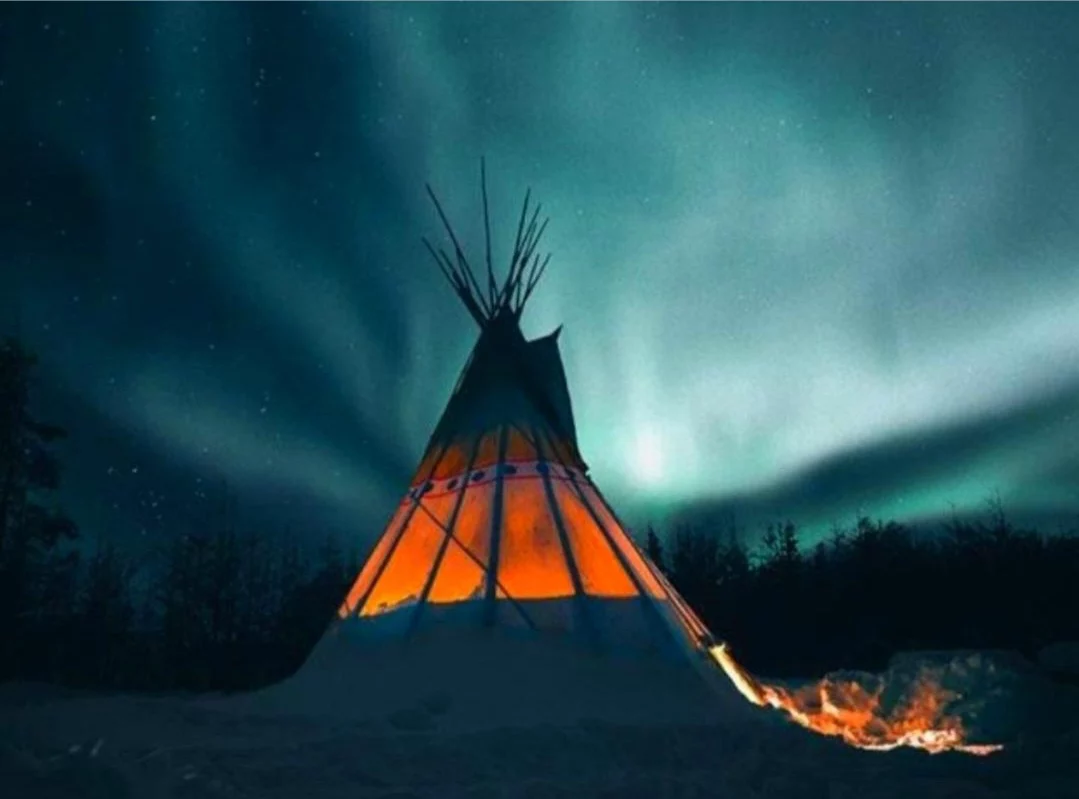
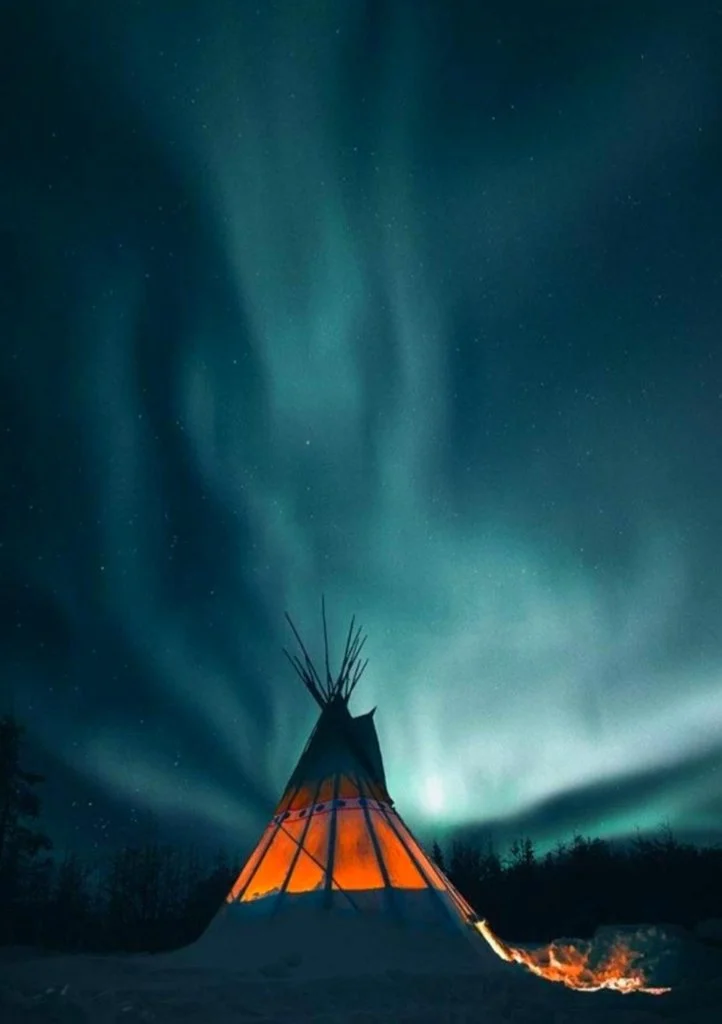
The Sámi speak of their ancestral relationship with the forests, the land, the reindeer, and the changing seasons. They tell of the sacred fire at the center of the lávvu, a tent similar to the tipi found in the Americas. They also describe the joik, their sacred song, and the ceremonial drum of the noaiddi, their ancestral medicine men and women. They preserve the memory of a way of life in which the land, the air, and the water were understood as gifts of the Creator. These gifts belonged to no one and sustained all living beings.
For centuries, Sámi ceremonial traditions were subjected to religious persecution and later policies of forced assimilation. During the Christianization of the Sámi, sacred drums were confiscated and destroyed, and ancestral spiritual practices were suppressed. Generations were pressured to abandon their languages and ways of life, and many were forced to do so.
Children were separated from their families and sent to boarding schools. They were often punished for speaking their mother tongue. The transmission of ancestral knowledge and traditional education was profoundly disrupted, as was their relationship with the land. These wounds have affected generations and continue to shape the lives of Sámi communities today.
Yet the wisdom of the Sámi has not disappeared. Their continuing relationship with the land, the natural elements, their languages, and ancestral practices bears witness to generations of perseverance.
They remind us in their own words.
“We the Sami people still exist. The culture, the language, the people are still here.”
Their words carry the living memory of a people who have endured profound suffering without losing the will to preserve their ancestral identity. They also invite us to recognize those throughout Europe who continue to safeguard the wisdom of our ancestors, even where ancient spiritual traditions were largely destroyed or silenced.
The histories of different peoples and continents have unfolded under different circumstances. Yet the persecution of ancestral traditions, the silencing of wisdom keepers, and the struggle to preserve ancestral ways of life are experiences shared across humanity. The loss of ancestral memory cannot be understood as the history of one continent alone. Nor can its survival be attributed to only one people.
During our journey to recover the sacred fire traditions of Europe, we have been deeply honored to share in the lives and teachings of Sámi communities. We have walked their lands and frozen waters, shared food, endured the cold, and experienced their traditions of fire, sweat, and purification. Through these relationships, we have learned their ancestral ways of kindling the sacred fire. We have also been entrusted with their ashes and the responsibility of honoring the wisdom they carry.
The careful preparation of the fire and the sharing of the ashes express reverence for the elements. They remind us that even the smallest actions can carry generations of knowledge. Such teachings are not simply techniques. They belong to a deeper relationship between human beings and the natural world. They also reflect the responsibilities that accompany life.
For more than ten years, Akhamani has worked with great dedication to remember and help recover the ancestral wisdom of Europe. This work has given particular attention to the sacred fire ceremony and the traditions of purification through heat and sweat.
This has been a journey of research, pilgrimage, contemplation, direct experience, and exchanges with elders and wisdom keepers from different ancestral lineages. It has required learning from surviving traditions and studying the traces left by our European ancestors. Over time, it has also required us to cultivate a more conscious relationship with practices whose deeper meanings have been forgotten by many.
We do not pretend that everything lost can simply be reconstructed or that the teachings of one people can replace those of another. Recovery requires humility, discernment, and a willingness to acknowledge what remains unknown. It is a patient work of remembrance, learning, and renewal.
Across the world, we encounter different expressions of humanity’s ancient relationship with fire, heated stones, water, steam, purification, and communal life.
In Mexico, these include the temazcal or temāzcalli of Nahua traditions and the zumpul ché known in Maya history. Among the Lakota, the sacred purification ceremony is known as inípi. Among the Anishinaabe, we encounter the madoodiswan. In India, the Ayurvedic tradition preserves practices of therapeutic sweating known as svedana.
Europe also holds a rich heritage of practices involving fire, heat, steam, and purification. These include the Northern Sámi sávdnje, the Finnish sauna and savusauna, and the Estonian saun and suitsusaun. Other traditions include the Swedish bastu, the Latvian pirts, the Lithuanian pirtis, the Russian banya, and the Irish teach allais, or house of sweat. The ancient communities of the northwestern Iberian Peninsula also left remarkable steam bathing structures, known today as balneários castrejos. Other forms of communal bathing developed through the Roman thermae and the hammam traditions.
These practices are not identical, nor do they all carry the same ceremonial meaning. Some have remained deeply connected to sacred traditions, while others have developed primarily as communal, therapeutic, or everyday bathing practices. Each belongs to its own history and cultural context.
Yet their presence across different regions reminds us of something deeply human. Across generations and continents, people have cultivated relationships with the elements. They have recognized the importance of purification, renewal, wellbeing, and the gathering of communities.
The sacred fire holds a particularly profound place within this shared human story. It has accompanied our ancestors through the great passages of life. It has brought families and communities together, illuminated the darkness, and served as a living center for prayer, offerings, remembrance, and transformation.
Throughout our journey, we have encountered ancestral traditions that express different understandings of the sacred fire. Each is shaped by its own teachings and ceremonial responsibilities. We honor these differences while also recognizing the deeper relationships that unite our humanity.
We are one ancient humanity, sharing a heritage of ancestral wisdom expressed through the many colors, languages, ceremonies, and stories of the world.
This wisdom forms a vast mosaic. Every tradition carries its own beauty, history, and understanding while remaining connected to the greater story of our humanity.
With this understanding, we also invite a deeper reflection on the contemporary discussion surrounding cultural appropriation.
Genuine concerns arise when sacred traditions are taken without understanding or when ceremonies are altered and commercialized. They also arise when knowledge is claimed without acknowledging the people and lineages who have preserved it. These concerns deserve respect and careful attention.
Yet when accusations, divisions, and arguments over cultural ownership consume our conversations, we risk losing sight of the urgent difficulties that ancestral communities continue to face.
While we debate who may approach a tradition, elders are passing away without sufficient opportunities to transmit their knowledge. Ancestral languages are disappearing. Sacred territories remain threatened. Families and communities face poverty, displacement, and the erosion of their traditional ways of life. Ceremonies that survived centuries of persecution are at risk of being forgotten because younger generations no longer have the means or opportunities to learn them.
These realities call us toward meaningful relationships, practical support, and responsible cultural exchange.
Respect does not require us to separate humanity into opposing worlds. Neither does recognizing our shared humanity give us the right to disregard the teachings, protocols, or custodianship of any tradition.
True exchange is born through invitation, trust, humility, and reciprocity. It recognizes that wisdom can be shared without being taken. Differences can be honored without becoming barriers, and unity does not require uniformity.
The recovery of ancestrality is ultimately about ensuring that communities can reclaim their memory without having to ask permission to exist. It means respecting their knowledge rather than ridiculing it and allowing their ceremonies to continue responsibly. It means sustaining their ways of life and their own ways of education so that future generations can receive the teachings their ancestors struggled so profoundly to preserve.
It also means learning to distinguish between the genuine transmission of ancestral knowledge and the superficial use of sacred symbols removed from their living context.
When we gather around a sacred fire or enter a temazcal or an inípi, we are invited to remember that these practices are far more than personal experiences. The same is true when we sing, pray, make offerings, fast, or simply sit together in silence. For many peoples, the continuation of these practices has been an expression of perseverance through centuries of hardship. It is an act of remembrance and a commitment to the ancestors, the living, and the generations yet to come.
The deepest way we honor that memory is to learn to respect what we do not yet understand, what we have not experienced, and the paths we have not walked ourselves.
This means approaching the wisdom of others without believing that we already know. We listen before speaking and receive teachings with gratitude and discernment. We recognize the sacrifices of those who preserved them and carry our commitments beyond the ceremonial space into our thoughts, feelings, choices, relationships, and daily actions.
Above all, we seek to accompany the communities who continue to safeguard these traditions. We support their lives, their aspirations, and their ability to transmit their knowledge to those who will follow.
At Akhamani, this dedication continues to guide our journey. We honor our ancestors not only by remembering their ceremonies, but also by sustaining the living wisdom they entrusted to humanity. We do so through the relationships we cultivate, the responsibilities we accept, the communities we support, and the ways in which we live.
Our deepest gratitude belongs to the elders, wisdom keepers, ambassadors, families, and communities who continue to carry this heritage, often through extraordinary dedication and sacrifice.
Their wisdom reminds us that the ancestral memory of humanity is not confined to the past. It remains alive wherever it is practiced with sincerity, sustained through responsibility, and passed onward with love, compassion, and respect for all our relations.
To honor that memory is to help ensure that the ancient wisdom of our humanity remains a living heritage for generations to come.